
- Davin : +86 133 3569 6939
- Alison : +86 150 8247 5717
- Mia : +86 136 8171 1685
Skip to product information


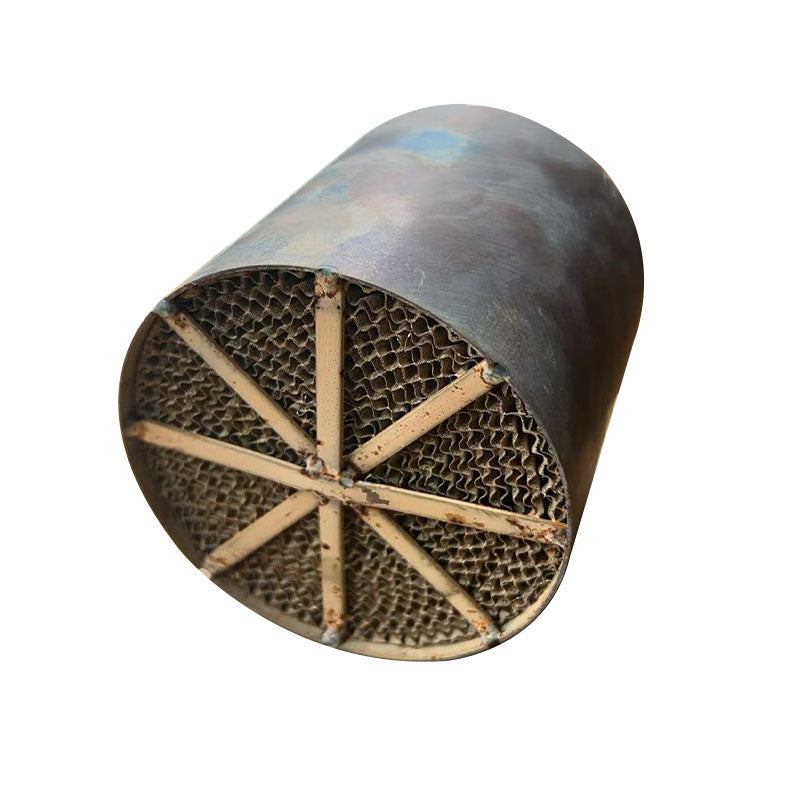
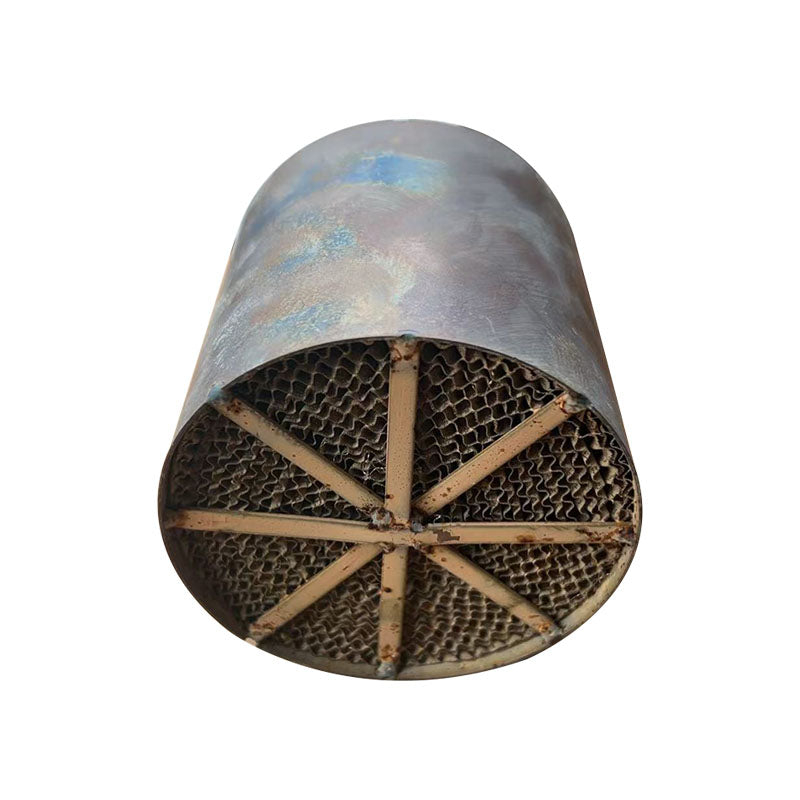
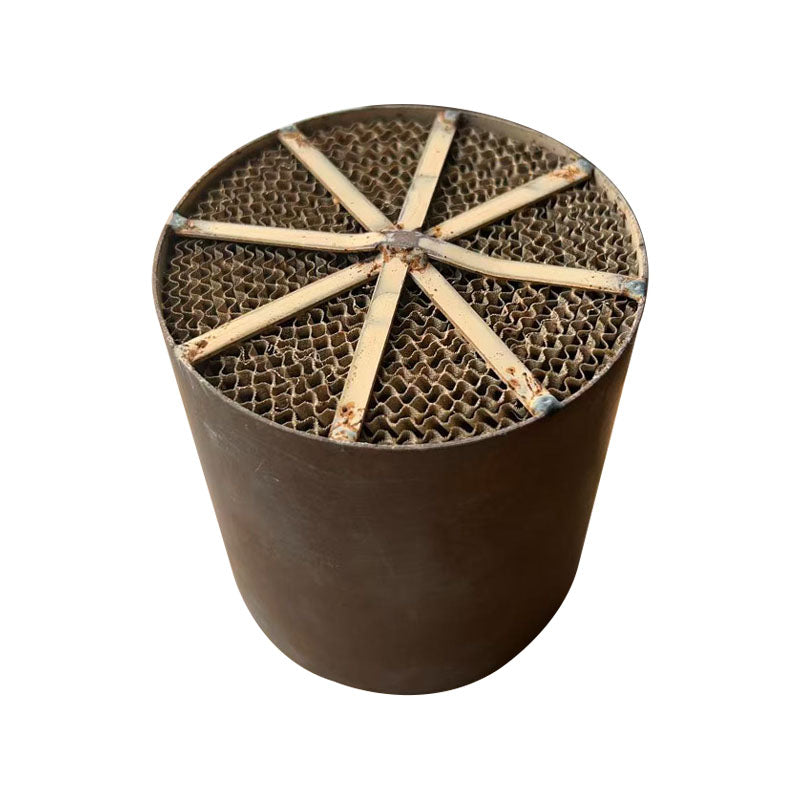


Direct-fit OEM replacement
bolt-on installation with no welding or cutting, saving time and shop costs.
Advanced catalysis
efficiently reduces CO, HC, and NOx to meet Euro 5/6 emission limits with ease.
Premium core + coating
delivers stable high‑temperature activity and extended service life.
Efficient response
18-24 hours online, 100% response rate from human customer service within 6-8 hours.
SVIPCAT Store
POC Catalytic Converter for Gasoline Cars Diameter 98mm
Product Description
Click to expandQ1 Metal substrate material specifications
Metal honeycomb substrates are manufactured in nearly 10,000 specifications and support full non‑standard customization.
- Housing materials: 316L, 304, 444, 441 (or customer‑specified).
- Core material: FeCr21Al6 (ferritic stainless steel).
- Carrier outer diameter: 12 – 960 mm.
- Height: 9 – 150 mm.
- Cell density (CPSI): 5 – 1200 cpsi.
- Shell wall thickness: 0.5 – 3.0 mm (shell‑less option available).
- Core wall thickness: 0.03 – 0.18 mm.
- Internal core configuration: single core, S‑core, or three‑core.
- Available shapes: cylindrical, rectangular, square, racetrack (oval), elliptical, trapezoidal, pentagonal, pear‑shaped.
These substrates offer extreme design flexibility to match virtually any exhaust system requirement.
Q2 Working principle of metal POC catalyst
POC stands for Particulate Oxidation Catalyst . A metal POC catalyst is an exhaust after‑treatment device designed to capture and oxidize particulate matter (PM) from engine exhaust.
Working Principle:
- Capture & Storage: As exhaust gases pass through the metal honeycomb substrate, particulate matter (soot and carbon particles) is physically captured and stored on the catalyst surface.
- Catalytic Oxidation: The captured particles are then oxidized (burned off) at temperatures between 250°C – 500°C through a catalytic reaction. The precious metal coating (platinum, palladium) on the metal substrate lowers the ignition temperature of the soot, allowing continuous passive regeneration during normal driving conditions.
- Flow‑Through Design: Unlike a DPF (Diesel Particulate Filter) which can become blocked, the POC uses an open flow‑through channel structure that allows exhaust gases to pass even when the PM storage capacity is saturated. This design minimizes backpressure while still achieving up to 60% particle reduction and 80–90% HC and CO conversion.
Metal Substrate Advantages for POC:
- Faster light‑off: Metal substrates have higher thermal conductivity, reaching operating temperature more quickly.
- Superior durability: Metal substrates resist thermal shock and vibration better than ceramic.
- Higher cell density options: Allows for greater surface area and improved particle capture efficiency.
- Lower backpressure: Thinner walls reduce exhaust restriction compared to ceramic substrates of equivalent volume.
Q3 What is a metal POC?
A metal POC (Particulate Oxidation Catalyst) is a catalytic converter that uses a metal honeycomb substrate (rather than ceramic) to capture and oxidize particulate matter from engine exhaust.
Key Characteristics:
- Substrate Material: FeCrAl alloy (ferritic stainless steel) with a corrugated or sinusoidal channel structure.
- Catalytic Coating: Coated with a washcoat containing precious metals (platinum, palladium) and promoters (ceria, alumina) that enable the oxidation of captured particles.
- Design: The metal foil is rolled or stacked to create a honeycomb structure with thin walls (as low as 0.03 mm) and high cell densities (up to 1200 CPSI).
- Flow‑Through vs. Wall‑Flow: Unlike a DPF which uses a wall‑flow design that can clog, a POC uses an open flow‑through design that allows exhaust to pass even when saturated.
How it differs from a traditional three‑way catalytic converter:
- A three‑way catalyst (TWC) primarily converts gaseous pollutants (CO, HC, NOx) through chemical reactions.
- A POC specifically targets particulate matter (soot), capturing it and burning it off through catalytic oxidation.
- Many modern vehicles use both: a TWC for gaseous emissions and a POC or GPF (Gasoline Particulate Filter) for particulate control.
Metal POC catalysts are commonly used in gasoline direct injection (GDI) engines and diesel applications to meet Euro 4, Euro 5, and Euro 6 particulate emission standards.
Q4 What standards do 3g/cft and 5g/cft correspond to?
3g/cft and 5g/cft refer to the precious metal loading (typically platinum, palladium, and rhodium) in the catalytic converter, measured in grams per cubic foot of substrate volume.
These loadings are directly linked to emission standards:
- Euro 5 – requires a catalyst with 3g/cft (3 grams of precious metals per cubic foot) to achieve the required conversion efficiency for HC, CO, and NOx.
- Euro 6 – requires a higher loading of 5g/cft (5 grams per cubic foot) to meet the stricter emission limits, especially for NOx and particulate matter.
In general, higher g/cft values provide better catalytic activity and durability, allowing the converter to maintain performance over a longer period and under more demanding conditions.
Why this matters to you:
- If your vehicle needs to comply with Euro 5 standards, a 3g/cft converter is sufficient.
- If your vehicle must meet Euro 6 (or higher) standards, you will need a 5g/cft or even higher loading converter to ensure proper emissions control.
- Always check your vehicle's emission certification level before selecting a replacement converter.
Q5 What is the function of a metal POC for gasoline vehicles?
A metal POC (Particulate Oxidation Catalyst) for gasoline vehicles serves several critical functions in the exhaust after‑treatment system:
Primary Functions:
- Particulate Matter (PM) Reduction: Captures and oxidizes soot particles from gasoline direct injection (GDI) engines. GDI engines produce more particulate emissions than traditional port‑fuel‑injected engines, and the POC helps reduce these emissions to meet Euro 6 particle number (PN) limits.
- Hydrocarbon (HC) and Carbon Monoxide (CO) Oxidation: The catalytic coating on the metal substrate oxidizes unburned hydrocarbons and carbon monoxide into CO₂ and H₂O, achieving 80–90% conversion efficiency.
- Passive Regeneration: During normal driving, exhaust temperatures (250°C–500°C) are sufficient to oxidize the captured soot, continuously regenerating the catalyst without the need for active regeneration cycles.
- Reduced Backpressure: The open flow‑through design of the metal POC minimizes exhaust backpressure compared to wall‑flow filters, preserving engine performance and fuel economy.
Why use a metal POC on a gasoline vehicle?
- Euro 6 compliance: Euro 6 emission standards introduced a particle number (PN) limit for gasoline vehicles. A POC helps GDI engines meet these requirements.
- Cost‑effective alternative to GPF: A POC is often more affordable and less restrictive than a full Gasoline Particulate Filter (GPF).
- Durability: The metal substrate is more resistant to thermal shock and vibration than ceramic, making it ideal for high‑performance and modified vehicles.
- Compact design: Metal POC catalysts can be made with thinner walls and higher cell densities, allowing for smaller, more efficient packaging.
Typical Installation Location:
A metal POC is typically installed downstream of the three‑way catalytic converter (TWC) but upstream of the muffler. This allows the POC to benefit from the heat of the exhaust gases while providing additional particulate control after the primary gaseous emission treatment.
Q6 What is your warranty policy?
Our warranty policy for catalytic converter products is as follows:
- Ceramic Muffler Cores — No warranty provided. These are mechanical components subject to wear and external factors.
- Catalytic Converter Substrates (Ceramic or Metal) — Covered by a 1‑year warranty against manufacturing defects. This warranty covers the substrate structure and catalytic coating integrity under normal use conditions.
Please note: This warranty is based on time only (1 year from the date of purchase) and does not include any mileage or kilometer limitation.
The warranty does not cover damage caused by:
- Improper installation
- Engine misfire or mechanical issues
- Use of leaded or low‑quality fuel
- Physical impact damage
- Contamination from oil or coolant
- Overheating due to incorrect tuning or modified engines
Please retain your purchase receipt and installation records for any warranty claims. If you have any questions about warranty coverage, please contact our support team.
Q7 Installation guide for metal catalytic converters
This guide covers the general installation procedure for metal substrate catalytic converters (both universal and shell‑type units). Professional installation by a qualified exhaust technician is strongly recommended.
⚠️ Before You Begin:
- Park the vehicle on a level, solid surface and use jack stands.
- Allow the exhaust system to cool completely – catalytic converters retain heat for a long time.
- Disconnect the negative battery terminal.
- Apply penetrating oil to all bolts and nuts at least a few hours in advance.
- Consult your vehicle's service manual for specific torque values and component locations.
Step 1: Remove the Old Catalytic Converter
- Raise the vehicle and secure it safely.
- Remove heat shields, braces, or underbody covers that block access.
- Unplug the upstream and downstream oxygen sensors (O₂ sensors) and carefully unscrew them from the old converter.
- Unbolt the flanged connections at the inlet and outlet. If the converter is welded, cut the pipes at the appropriate points using a reciprocating saw or exhaust pipe cutter.
- Remove the old converter assembly from the vehicle.
Step 2: Prepare the Exhaust Pipes
- Clean the pipe ends thoroughly with a wire brush to remove rust, carbon, and old gasket material.
- If cut, deburr the edges to ensure a smooth surface.
- Check the pipe diameter and roundness; use an expander if needed.
- Fit new gaskets on both flanges (never reuse old gaskets).
Step 3: Position and Install the New Metal Converter
- Place the new converter in the exhaust system, ensuring the flow direction arrow points toward the rear of the vehicle.
- Align the inlet and outlet pipes with the flanges or cut ends.
- For bolt‑on converters:
- Insert new bolts and nuts, apply high‑temperature anti‑seize, and torque to the manufacturer's specification (usually 30–45 Nm).
- Tighten in a cross‑pattern to avoid warping.
- For weld‑on converters:
- Tack‑weld in several places to hold position.
- Verify alignment and weld fully around both joints using stainless steel wire (for stainless exhausts).
- Allow the welds to cool slowly.
- For clamp‑on connections, slide the clamp over the joint and tighten to the recommended torque.
Step 4: Reinstall Oxygen Sensors and Other Components
- Apply a small amount of anti‑seize to the sensor threads (avoid the sensor tip).
- Screw the O₂ sensors into their bungs on the new converter and torque to 30–45 Nm.
- Reconnect the sensor wiring securely and route it away from heat sources.
- Reinstall all heat shields, brackets, and underbody covers removed earlier.
Step 5: Test the Installation
- Reconnect the battery.
- Start the engine and let it idle.
- Check for exhaust leaks around all joints (listen for hissing, feel for escaping gases, or use soapy water spray).
- Allow the engine to reach normal operating temperature (the converter needs ~300°C to begin working).
- Verify that the check engine light does not appear. If it does, use an OBD‑II scanner to read codes; common issues include O₂ sensor problems or catalyst inefficiency.
- Take a 10‑15 minute test drive and re‑inspect all connections after the system has cooled.
⚠️ Important Notes:
• Metal substrates can be damaged by excessive heat – ensure proper fuel mixture and ignition timing to avoid meltdown.
• Always use the correct type of converter for your engine size and power output.
• For high‑flow performance converters, ECU tuning may be required to prevent error codes.
• In some areas, replacing a converter with a non‑OEM unit may be illegal – check local emissions laws beforehand.
• If you are not experienced with exhaust system work, we strongly recommend using a professional shop.
• Metal substrates can be damaged by excessive heat – ensure proper fuel mixture and ignition timing to avoid meltdown.
• Always use the correct type of converter for your engine size and power output.
• For high‑flow performance converters, ECU tuning may be required to prevent error codes.
• In some areas, replacing a converter with a non‑OEM unit may be illegal – check local emissions laws beforehand.
• If you are not experienced with exhaust system work, we strongly recommend using a professional shop.
Q8 What are your shipping & delivery times?
Our shipping and delivery times depend on stock availability:
- If we have stock: We ship within 1–3 business days. Delivery typically takes 12–15 days (including customs clearance and duties).
- If we are out of stock: Production and handling take 15–20 business days, then delivery takes approximately 12–15 days (including customs clearance and duties).
All shipments are sent DDP (Delivered Duty Paid) – this means that all customs clearance fees, import duties, and taxes are already included in the total price you pay. You will not be charged any extra fees upon delivery.
If you need faster delivery, please contact us to arrange expedited shipping via DHL, UPS, or FEDEX (additional charges apply).
We will provide you with a tracking number as soon as your order is dispatched.
Q9 How can I contact you?
You can reach our team directly via WhatsApp or email. We are happy to assist with any questions about products, sizing, orders, or technical support.
We typically respond within 24 hours (Monday–Saturday). Please include your order number or vehicle details for faster assistance.
Q10 Where is your headquarters located?
Our company headquarters is located at:
Building C, Zhongguan Innovation Center, Dongcheng 2nd Road, Pujiang Town, Minhang District, Shanghai, China
We welcome business visits by appointment. Please contact us in advance to arrange a suitable time.
Regular price
£0.00 GBP
Taxes included.
Shipping calculated at checkout.
Out of stock
Size(diameter x height)mm : :
98x100mm
Standard :
3g/cft
Quantity :
Whatsapp
E-mail
- Davin : KSRCAT@proton.me
- Alison:Ksrcatalytic@gmail.com
- Mia : Kesairay@proton.me
POC Catalytic Converter for Gasoline Cars Diameter 98mm
Regular price
£0.00 GBP

