
- Davin : +86 133 3569 6939
- Alison : +86 150 8247 5717
- Mia : +86 136 8171 1685
Skip to product information




Direct-fit OEM replacement
bolt-on installation with no welding or cutting, saving time and shop costs.
Advanced catalysis
efficiently reduces CO, HC, and NOx to meet Euro 5/6 emission limits with ease.
Premium core + coating
delivers stable high‑temperature activity and extended service life.
Efficient response
18-24 hours online, 100% response rate from human customer service within 6-8 hours.
SVIPCAT Store
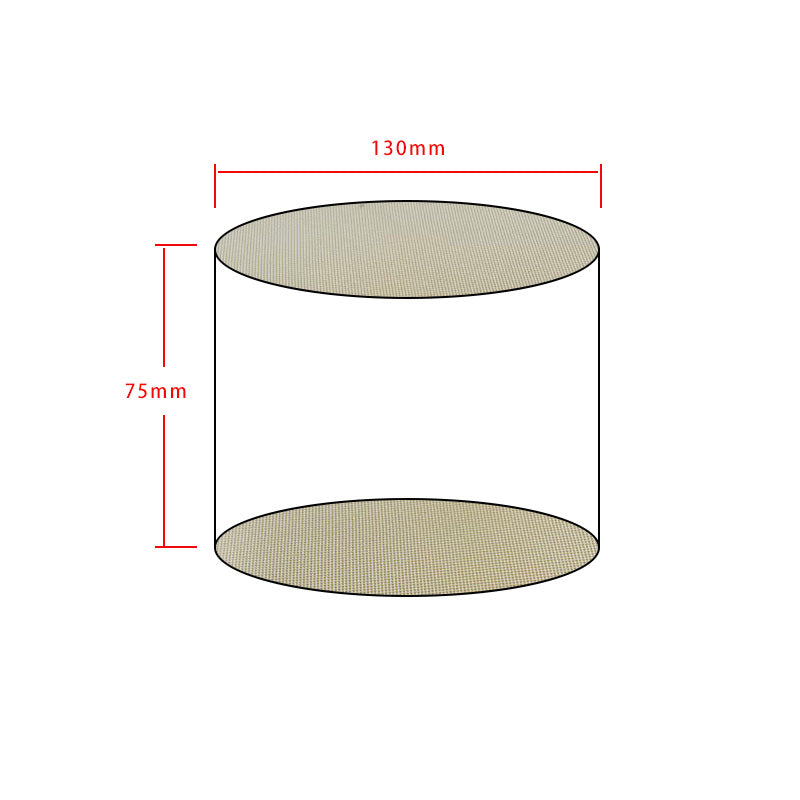
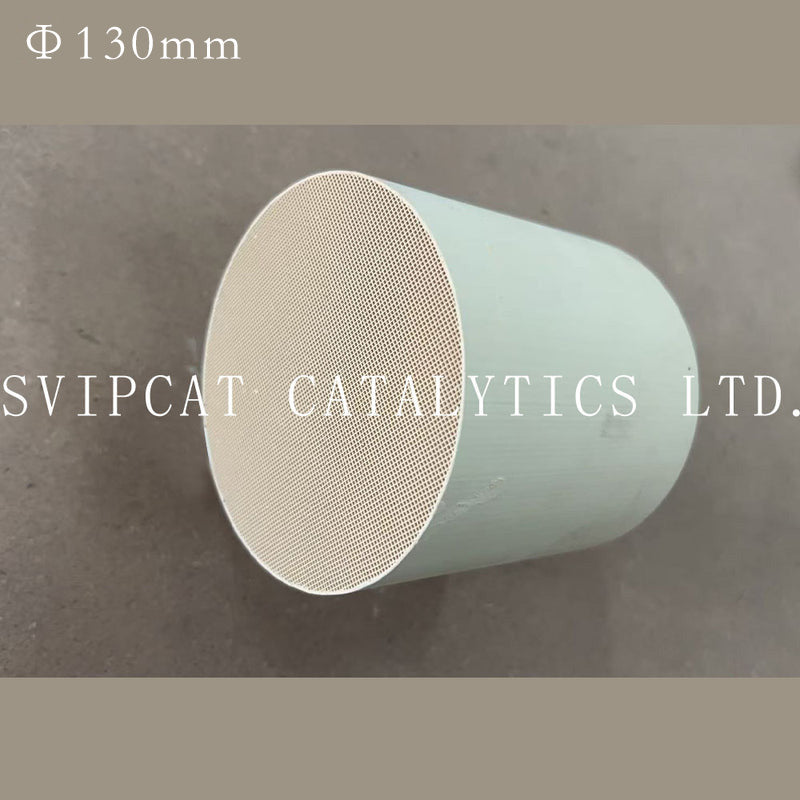
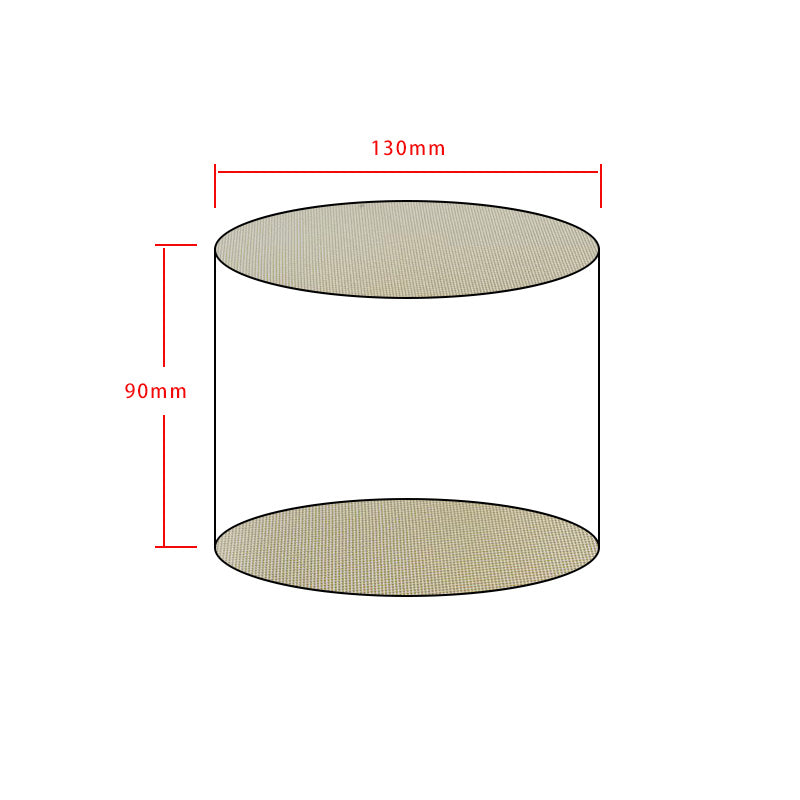
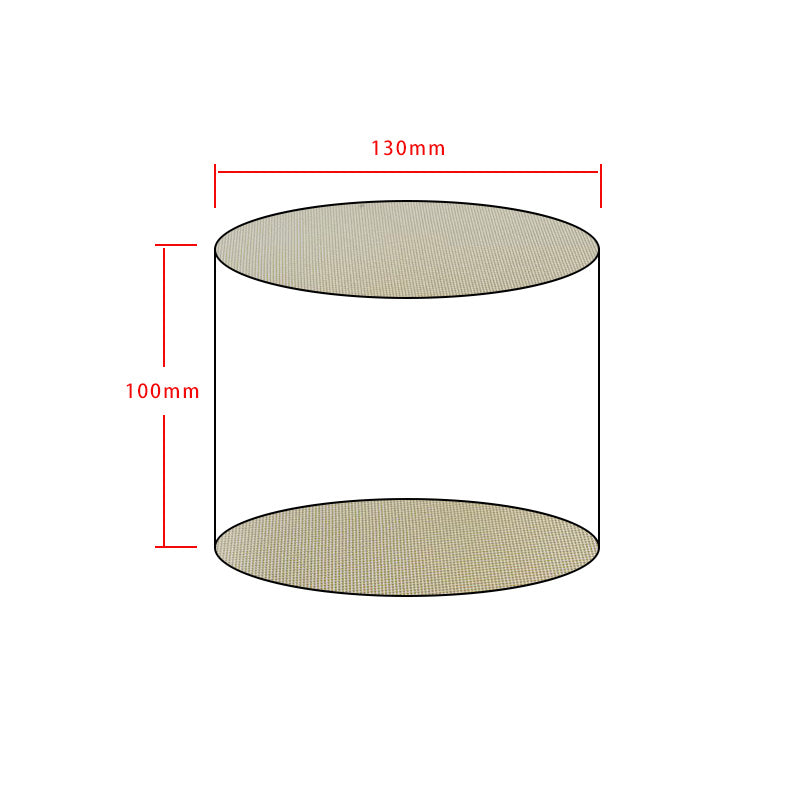
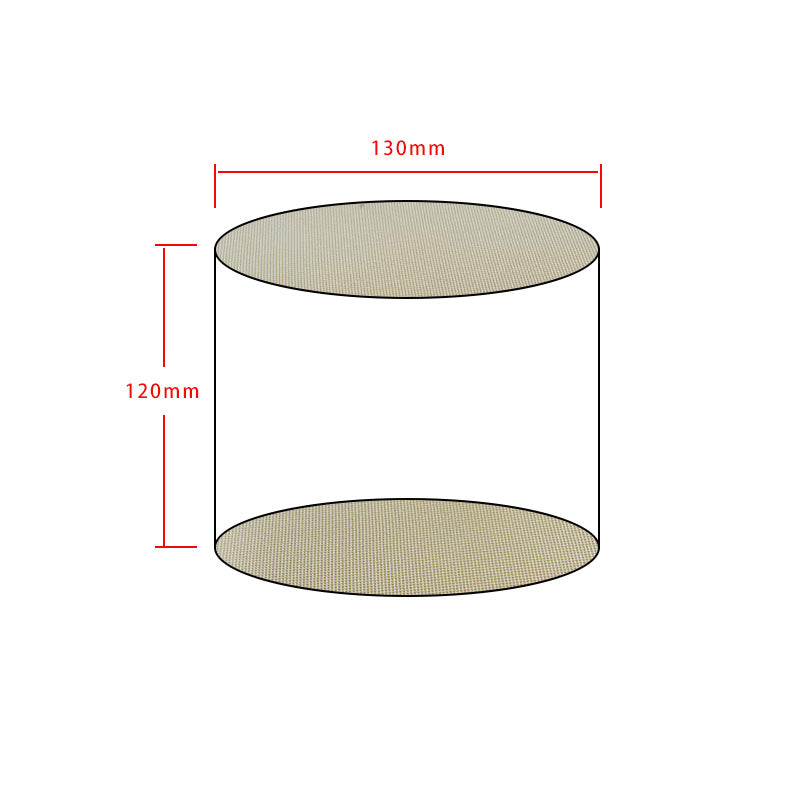
Ceramic Catalytic Converter 130mm
Product Description
Click to expandQ1 What is a ceramic catalytic converter substrate?
🧱 Main Material: Why Cordierite?
The vast majority of ceramic substrates are made from a ceramic material called cordierite (chemical formula: 2MgO·2Al₂O₃·5SiO₂).
It is chosen for three key properties:
- High temperature resistance: Exhaust gas temperatures are very high, but cordierite can withstand continuous operation up to 1200°C, making it suitable for extreme environments.
- Thermal shock resistance: Its very low coefficient of thermal expansion means it is unlikely to crack from rapid temperature changes.
- High mechanical strength: It has sufficient strength to withstand vibration and impacts during driving.
🏗️ Core Structure: Why Honeycomb?
The substrate is designed as a honeycomb to maximize the chemical reaction area within a limited space.
- Thin walls, many cells: The cell walls are very thin. Mainstream products now have cell densities of 400 or 600 CPSI (cells per square inch).
- Extreme pursuit: Advanced technologies can achieve densities up to 1200 CPSI with wall thicknesses as thin as 0.05 mm.
This design minimizes exhaust backpressure while greatly increasing the contact opportunity between exhaust gases and the catalyst.
⚙️ Functional Role: Carrier, Not Catalyst
The substrate itself is inert and does not directly participate in reactions. Its role is as a "skeleton":
- Supports the washcoat: A porous active coating (mainly γ-alumina) is applied to the substrate surface. This rough, porous layer increases the actual reaction area by nearly 7000 times compared to the substrate's geometric surface area.
- Disperses precious metals: The true "purification heroes" – precious metals such as platinum (Pt), rhodium (Rh), and palladium (Pd) – are highly dispersed on this coating to maximize catalytic effect.
⚠️ Important Note: Limitations of Ceramic Substrates
Despite excellent performance, ceramic substrates have some inherent drawbacks:
- Brittleness: Ceramic is relatively brittle and can break under strong impact (e.g., bottoming out).
- Clogging / "Poisoning": Lead (Pb), sulfur (S) from low-quality fuel, and phosphorus (P) from engine oil can adhere to the cell walls, causing clogging or catalyst deactivation – known as "catalyst poisoning".
- Melting at high temperature: If the engine runs abnormally causing exhaust temperatures to exceed about 950°C, the ceramic substrate itself may sinter or melt, leading to permanent damage.
Q2 Ceramic muffler VS Ceramic catalytic ?
The ceramic catalytic converter core is a "chemical laboratory" that purifies exhaust gases, while the ceramic muffler core is a "physical soundproofing chamber" that reduces noise. Their core differences are as follows:
| Aspect | Ceramic Catalytic Converter Core (coated) | Ceramic Muffler Core (uncoated) |
|---|---|---|
| Core Function | Purifies exhaust gases by converting harmful substances (CO, HC, NOx) into harmless ones via chemical reactions. | Reduces exhaust noise through physical absorption or interference of sound waves. |
| Working Principle | Catalytic reactions: uses a precious metal coating (Pt, Rh, Pd) as a catalyst to promote oxidation and reduction reactions of CO, HC, and NOx. | Physical sound absorption: uses the sound-absorbing properties of porous ceramic or reflection/interference in specific chamber structures to dissipate sound energy. |
| Surface Coating | Yes – coated with an active layer containing precious metals (Pt, Rh, Pd). This coating is key to the purification function. | None – the core is purely ceramic material with no catalytic coating. |
| Structural Characteristics | High-precision honeycomb structure with straight, thin walls to provide a huge reaction surface area within a limited volume. | Varied – can be porous foam or complex chambers with perforations, designed to optimise acoustic performance. |
| Effect on Exhaust Flow | Higher resistance – the dense honeycomb cells significantly increase exhaust backpressure. | Relatively lower resistance – design balances sound reduction with exhaust flow. |
🔬 Ceramic Catalytic Converter Core – the "Chemical Laboratory" of Exhaust Treatment
This core is the most essential purification device in the entire exhaust system.
- Core mission: Its only and most important task is to purify harmful gases from the engine. It simultaneously treats three main pollutants: carbon monoxide (CO), hydrocarbons (HC), and nitrogen oxides (NOx) – hence the name "three‑way".
- How it works: It is essentially a carrier. It is inert by itself; the key lies in the precious metal catalyst coating (Pt, Rh, Pd) applied to its surface. When hot exhaust gases pass through the honeycomb channels, the harmful gases undergo oxidation and reduction reactions under the catalyst's influence, converting into harmless CO₂, H₂O, and N₂.
- Structural features: A precision honeycomb ceramic block with thousands of parallel, straight channels. This design greatly increases the contact area between exhaust gases and the catalyst, thus improving purification efficiency.
🔇 Ceramic Muffler Core (uncoated) – the "Physical Sound Absorber"
This is typically the core component inside the muffler at the end of the exhaust system.
- Core mission: Specifically responsible for reducing exhaust noise. When the exhaust valve opens, it creates huge pressure waves (noise), and the muffler core's job is to eliminate that noise.
-
How it works: It involves no chemical reactions at all. Its sound‑reduction principle is purely physical:
- Sound absorption: As exhaust gases pass through the porous ceramic, sound waves cause air vibration within the pores, and friction against the pore walls converts sound energy into heat energy, which is dissipated.
- Reflection and interference: By designing specific chambers and baffles, sound waves reflect multiple times and interfere with each other, cancelling out noise.
- Structural features: Varied – it can be simple porous foam ceramic, or a complex structure with multiple chambers and perforated tubes. The fact that it has no coating means it relies solely on physical structure for sound reduction.
📝 Summary
Think of them as two workers on different stages of the exhaust system's "production line":
- The ceramic catalytic converter core (coated) is a chemist – it actively transforms toxic substances into harmless ones using its precious metal coating.
- The ceramic muffler core (uncoated) is a physicist – it does not change the gas composition, but merely absorbs or cancels out sound wave energy using its porous structure or chambers.
Q3 How do I confirm my catalyst size?
To confirm the correct catalyst dimensions for your vehicle, you can use any of the following methods:
- Measure the housing circumference — Measure the outer circumference of the converter housing, then calculate the diameter. From that, you can derive the approximate size of the internal catalyst core.
- Create a profile drawing for irregular shapes — If the catalyst has a non‑standard (irregular) shape, you will need to produce a detailed profile drawing. You can use CAD software or other design tools. Alternatively, you can place the catalyst on an X‑Y coordinate system, divide the four right‑angle quadrants into equal 15° increments, then measure the radial distance from the origin (0 point) to the catalyst's edge along each radial line. Record these measurements to map the precise shape.
- Send a physical sample to us — If the above methods are not convenient, you can simply send us a sample of your original catalyst. We will measure it accurately and confirm the correct size for you.
Whichever method you choose, we recommend double‑checking your measurements before placing an order to ensure a perfect fit.
Q4 How does a catalytic converter work?
A three-way catalytic converter (TWC) simultaneously converts three primary harmful exhaust pollutants into less harmful substances through oxidation and reduction reactions:
- Carbon Monoxide (CO) → oxidized into Carbon Dioxide (CO₂)
- Unburned Hydrocarbons (HC) → oxidized into Carbon Dioxide (CO₂) and Water (H₂O)
- Nitrogen Oxides (NOx) → reduced into Nitrogen (N₂) and Oxygen (O₂)
The ceramic honeycomb substrate is coated with a "washcoat" containing precious metal catalysts (platinum, palladium, rhodium). As exhaust gases pass through the honeycomb channels at high temperature (around 300°C), these metals catalyze the chemical reactions that convert approximately 98% of harmful emissions into harmless gases. This process is essential for meeting global emissions standards and protecting air quality.
Q5 Does this meet Euro 3-6 emissions standards?
Yes. Our ceramic catalytic converter substrates are designed to comply with Euro 3, Euro 4, Euro 5, and Euro 6 emissions standards. When properly installed on a vehicle that is otherwise in good mechanical condition, our substrates support the vehicle's ability to meet the emissions limits for which it was originally certified. Euro 3 was introduced in 2000, with each subsequent standard imposing stricter limits — our substrates are engineered to meet the requirements across this range.
Note: Emissions compliance depends on the complete vehicle system, not just the catalytic converter. Proper engine tuning, oxygen sensor function, and overall engine health are also critical factors.
Q6 What is your warranty policy?
Our warranty policy differs by product type:
- Ceramic Muffler Cores — No warranty provided. These are mechanical components subject to wear and external factors.
- Ceramic Catalytic Converter Substrates — Covered by a 2-year / 50,000 km (approximately 31,000 miles) warranty against manufacturing defects. This warranty covers the ceramic substrate structure and catalytic coating integrity under normal use conditions.
The warranty does not cover damage caused by improper installation, engine misfire, use of leaded fuel, physical impact damage, or contamination from oil/coolant. Please retain your purchase receipt and installation records for warranty claims.
Q7 Installation guide for ceramic substrate cores
Our ceramic catalytic converter substrates are sold as replacement internal cores (the "guts" of the converter). Professional installation is strongly recommended. Please follow these general guidelines:
- Safety first — Allow the exhaust system to cool completely. Disconnect the negative battery terminal before beginning work.
- Remove the old converter housing — Carefully remove the catalytic converter assembly from the vehicle's exhaust system.
- Open the housing — The converter housing (metal shell) must be opened to access and remove the old substrate. This typically requires cutting or splitting the shell along the seam.
- Remove the old substrate — Carefully extract the old, degraded ceramic substrate and any mounting mat material from the housing.
- Clean the housing interior — Ensure the inside surface of the metal shell is clean and free of debris, dust, grease, or any old mat residue.
- Install the new substrate — Wrap the new ceramic substrate with the appropriate intumescent mounting mat (sold separately) and insert it into the housing. Proper alignment and positioning are crucial for optimal performance.
- Close and weld the housing — Securely weld or seal the housing closed following proper exhaust welding procedures.
- Reinstall the converter — Mount the reassembled catalytic converter back onto the vehicle's exhaust system with new gaskets and hardware.
- Test operation — Reconnect the battery, start the engine, and check for exhaust leaks and proper operation. Allow the vehicle to reach operating temperature and verify that the check engine light remains off.
⚠️ Important: Always follow your vehicle manufacturer's service procedures. Improper installation may damage the substrate, reduce performance, void the warranty, and create safety hazards. We recommend having this work performed by a certified automotive technician.
Q8 What are your shipping & delivery times?
Our shipping and delivery times depend on stock availability:
- If we have stock: We ship within 1–3 business days. Delivery typically takes 12–15 days (including customs clearance and duties).
- If we are out of stock: Production and handling take 15–20 business days, then delivery takes approximately 12–15 days (including customs clearance and duties).
All shipments are sent DDP (Delivered Duty Paid) – this means that all customs clearance fees, import duties, and taxes are already included in the total price you pay. You will not be charged any extra fees upon delivery.
If you need faster delivery, please contact us to arrange expedited shipping via DHL, UPS, or FEDEX (additional charges apply).
We will provide you with a tracking number as soon as your order is dispatched.
Q9 How can I contact you?
You can reach our team directly via WhatsApp or email. We are happy to assist with any questions about products, sizing, orders, or technical support.
We typically respond within 24 hours (Monday–Saturday). Please include your order number or vehicle details for faster assistance.
Q10 Where is your headquarters located?
Our company headquarters is located at:
Building C, Zhongguan Innovation Center, Dongcheng 2nd Road, Pujiang Town, Minhang District, Shanghai, China
We welcome business visits by appointment. Please contact us in advance to arrange a suitable time.
Regular price
£4.49 GBP
Taxes included.
Shipping calculated at checkout.
32 in stock
Standard :
Ceramic silencer
Cpsi :
400
Size(diameter x height)mm :
130x75mm
Quantity :
Whatsapp
E-mail
- Davin : KSRCAT@proton.me
- Alison:Ksrcatalytic@gmail.com
- Mia : Kesairay@proton.me
Ceramic Catalytic Converter 130mm
Regular price
£4.49 GBP

