
- Davin : +86 133 3569 6939
- Alison : +86 150 8247 5717
- Mia : +86 136 8171 1685
Skip to product information


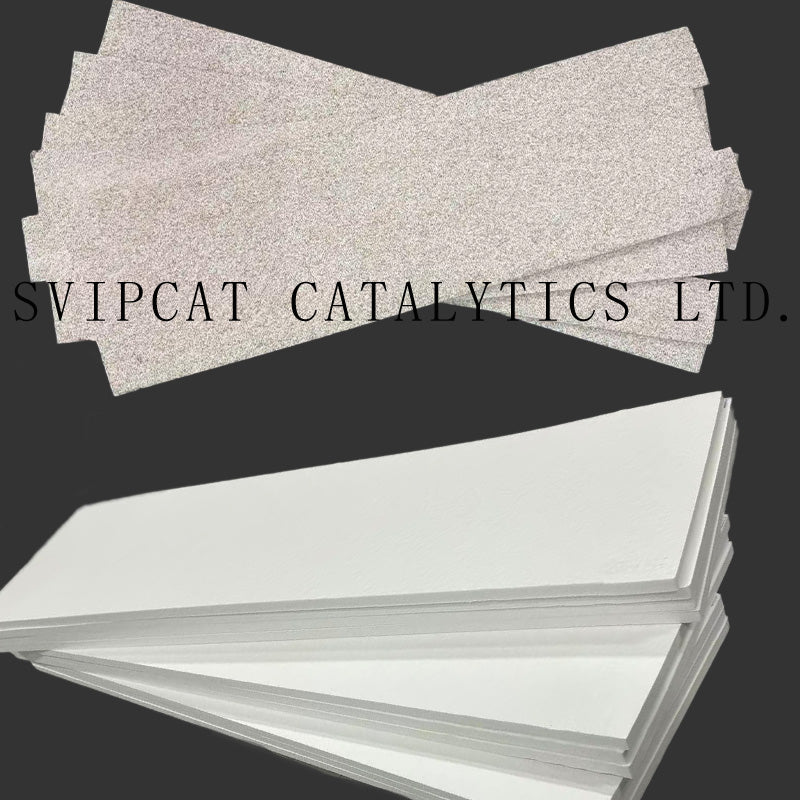
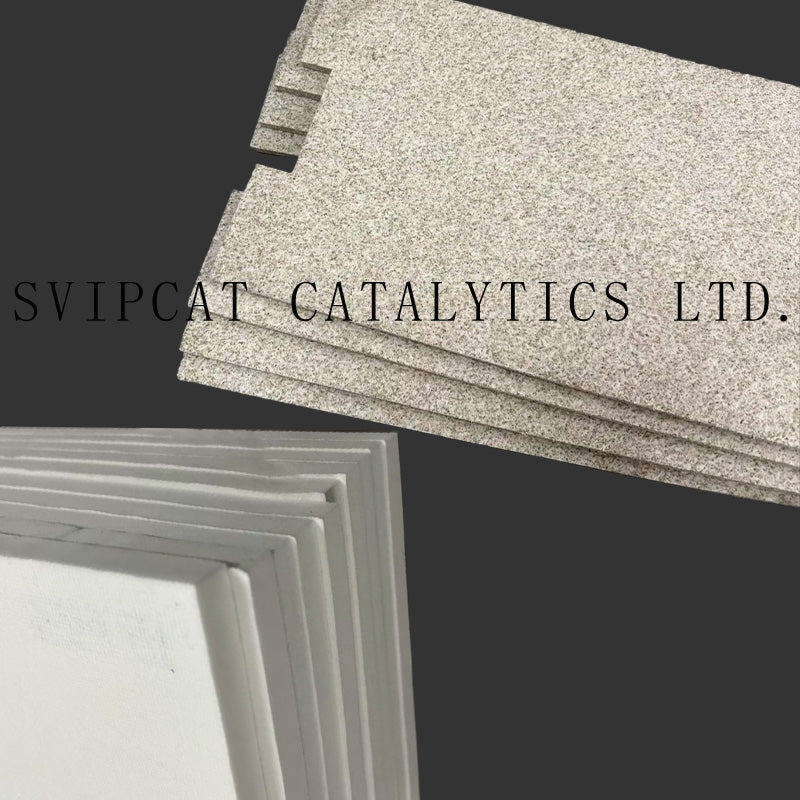
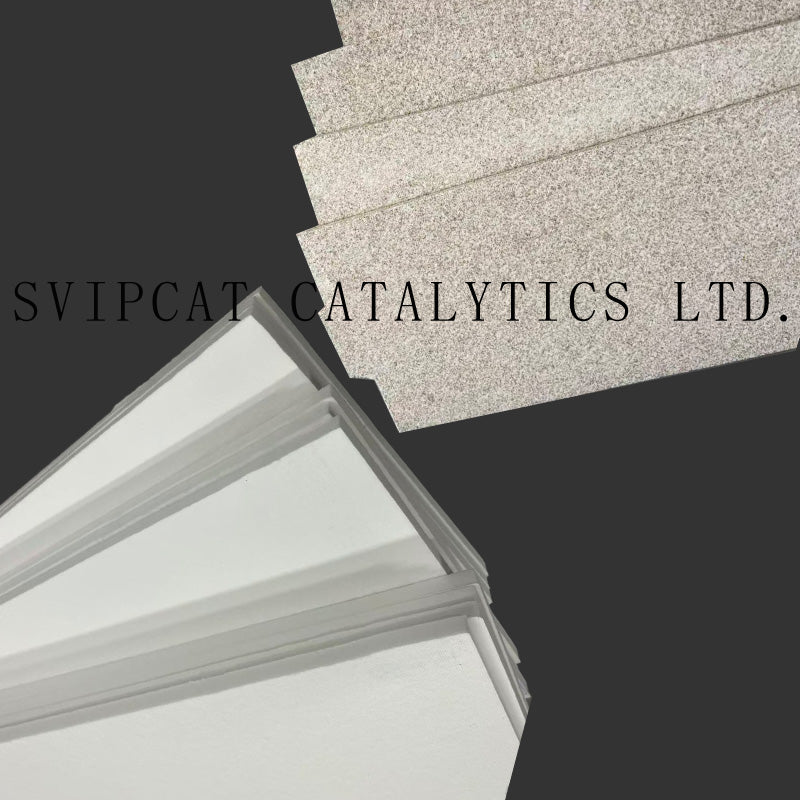


Direct-fit OEM replacement
bolt-on installation with no welding or cutting, saving time and shop costs.
Advanced catalysis
efficiently reduces CO, HC, and NOx to meet Euro 5/6 emission limits with ease.
Premium core + coating
delivers stable high‑temperature activity and extended service life.
Efficient response
18-24 hours online, 100% response rate from human customer service within 6-8 hours.
SVIPCAT Store
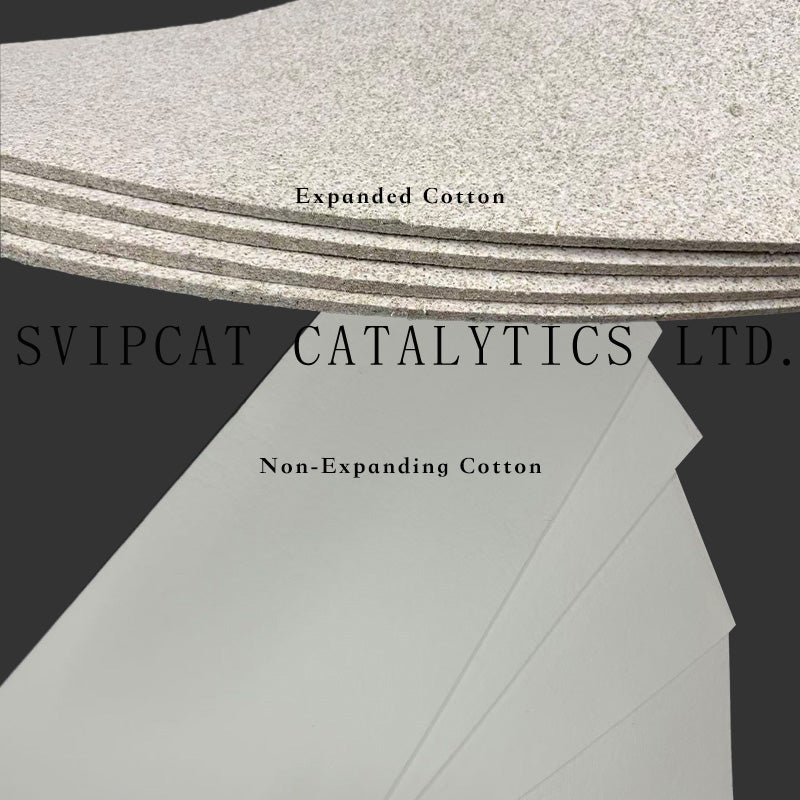
5.0mm Expanded/Non-Expanded Cotton Applicable Package Gap 5.0mm
Product Description
Click to expandQ1 What is a catalytic converter mounting mat?
A catalytic converter mounting mat (also known as a support mat or insulating mat) is a specialised high‑temperature fibrous material placed between the ceramic substrate (catalyst or DPF) and the metal canister housing. It serves multiple critical functions:
- Thermal insulation: Reduces heat loss from the exhaust gases, helping the catalyst reach its light‑off temperature quickly and maintaining optimal operating temperature.
- Mechanical support: Securely holds the fragile ceramic substrate in place, absorbing vibration and preventing movement that could cause cracking.
- Sealing: Prevents exhaust gas from bypassing the substrate, ensuring all gases pass through the catalyst channels.
- Thermal expansion compensation: Accommodates differential expansion between the ceramic and metal housing during temperature changes.
Mounting mats are typically made from ceramic fibres, vermiculite, or a combination of both, and are designed to withstand temperatures up to 1200°C.
Q2 Difference between intumescent and non‑intumescent mats?
Catalytic converter mounting mats fall into two main categories: intumescent (expanding) and non‑intumescent (non‑expanding). They differ in material composition, behaviour, and application:
| Property | Intumescent Mat | Non‑Intumescent Mat |
|---|---|---|
| Main components | Vermiculite + ceramic fibres + binders | High‑purity ceramic fibres (e.g., alumina‑silica) |
| Expansion behaviour | Expands significantly when heated (vermiculite exfoliates) | Minimal expansion; relies on compression packing |
| Thermal expansion compensation | Excellent – expansion fills gaps as temperatures rise | Limited – requires precise initial gap control |
| Temperature resistance | Up to ~900°C (vermiculite degrades above) | Up to ~1200°C |
| Sealing ability | High – active expansion ensures tight seal | Good – relies on mechanical pressure |
| Typical application | Gasoline and diesel passenger cars, Euro 5/6 systems | Heavy‑duty, high‑temperature applications (e.g., commercial trucks, industrial) |
| Cost | Higher (due to vermiculite and processing) | Lower (simpler composition) |
Intumescent mats are more common in modern vehicles because they maintain a consistent sealing force over a wide temperature range. Non‑intumescent mats are preferred for very high‑temperature or long‑life applications where vermiculite might degrade.
Q3 Intumescent mat parameters and recommended installation gap?
The table below shows typical specifications for intumescent mounting mats based on standard product grades. These values are critical for selecting the correct mat for a given substrate and housing diameter.
| Basic weight (g/m²) | Weight lower (g/m²) | Weight upper (g/m²) | Standard thickness (mm) | Thickness lower (mm) | Thickness upper (mm) | Recommended gap (mm) | Gap range (mm) | Bulk density (g/cm³) | Loss on ignition (%) | Vermiculite (%) | Expansion temp (°C) | Expansion ratio T1/T0 | Pressure after aging (kPa) |
|---|---|---|---|---|---|---|---|---|---|---|---|---|---|
| 2600 | 2392 | 2808 | 10.80 | 9.18 | 12.42 | 4.00 | 3.40 – 4.60 | 0.65 | 4 – 11 | 20 – 35 | ≤420 | ≥0.85 | ≥35 |
| 3250 | 2990 | 3510 | 12.50 | 10.63 | 14.38 | 5.00 | 4.30 – 5.70 | ||||||
| 3900 | 3588 | 4212 | 15.60 | 13.26 | 17.94 | 6.00 | 5.10 – 6.90 | ||||||
| 4550 | 4186 | 4914 | 17.50 | 14.88 | 20.13 | 7.00 | 5.95 – 8.05 | ||||||
| 5200 | 4784 | 5616 | 20.50 | 17.43 | 23.58 | 8.00 | 6.80 – 9.20 |
How to use: The recommended gap corresponds to the radial clearance between the ceramic substrate and the inner wall of the metal housing. Choosing the correct weight and thickness ensures the mat provides sufficient holding pressure without damaging the substrate.
Q4 Non‑intumescent mat parameters and recommended installation gap?
Non‑intumescent mats are made from high‑purity ceramic fibres (typically alumina‑silica) and do not contain vermiculite. They rely on mechanical compression to hold the substrate, and their performance is determined by fibre diameter, density, and thickness. Typical specifications for non‑intumescent mats are as follows:
| Basic weight (g/m²) | Weight tolerance (±) | Standard thickness (mm) | Thickness tolerance (± mm) | Recommended gap (mm) | Gap range (mm) | Bulk density (g/cm³) | Max. service temp (°C) | Loss on ignition (%) |
|---|---|---|---|---|---|---|---|---|
| 1500 | ±150 | 8.0 | ±1.0 | 3.0 | 2.5 – 3.5 | 0.55 | 1100 | ≤2 |
| 2000 | ±200 | 10.0 | ±1.2 | 4.0 | 3.4 – 4.6 | 0.60 | 1150 | ≤2 |
| 2500 | ±250 | 12.5 | ±1.5 | 5.0 | 4.3 – 5.7 | 0.65 | 1200 | ≤2 |
| 3000 | ±300 | 15.0 | ±1.8 | 6.0 | 5.1 – 6.9 | 0.68 | 1250 | ≤2 |
Key differences vs. intumescent:
- No active expansion – the mat must be installed with a precise initial gap to maintain pressure.
- Higher continuous temperature capability (up to 1250°C).
- Lower loss on ignition (<2%) – less binder burn‑off, ensuring long‑term dimensional stability.
- Recommended for applications where exhaust temperatures regularly exceed 900°C (e.g., heavy‑duty trucks, off‑highway equipment).
Q5 What is the installation gap?
The installation gap is the radial clearance between the outer diameter of the ceramic substrate (catalyst or filter) and the inner diameter of the metal housing (canister). It is defined as:
Installation gap = (Inner diameter of housing – Outer diameter of substrate) / 2
This gap is critical because it determines how much the mounting mat is compressed during assembly. Correct gap selection ensures:
- Sufficient holding force: The mat must be compressed to a level that secures the substrate against vibration and thermal expansion.
- Prevents substrate damage: Too small a gap can over‑compress the mat, causing excessive pressure that cracks the ceramic.
- Maintains sealing: Proper compression ensures exhaust gas does not bypass the substrate.
- Compensates for differential expansion: The mat accommodates the different thermal expansion rates of ceramic and metal.
The recommended gap values for intumescent mats are listed in Q3 (e.g., 4.00 ± 0.60 mm for a 2600 g/m² mat). For non‑intumescent mats, similar ranges apply but with tighter tolerances due to lack of expansion. Always consult the mat manufacturer's specifications for your specific substrate size.
Q6 Do you support custom manufacturing?
Yes, we fully support custom manufacturing.
We can produce mounting mats tailored to your specific requirements, including:
- Custom dimensions: Any substrate outer diameter, height, and shape (round, oval, racetrack) can be accommodated.
- Custom weight and thickness: We can adjust the basis weight and thickness to match your required installation gap and holding pressure.
- Material type: Choose from intumescent (vermiculite‑based) or non‑intumescent (ceramic fibre‑based) grades.
- Special properties: Low‑LOI, high‑temperature resistance, or specific binder systems for unique application needs.
To start a custom order, simply provide us with:
- Substrate outer diameter and length
- Housing inner diameter (or desired installation gap)
- Operating temperature range
- Any special requirements (e.g., high thermal shock, low ash)
Our engineering team will then design the optimal mat specification and provide a sample for your approval before mass production.
Q7 What is the minimum order quantity (MOQ)?
Our standard minimum order quantity for mounting mats is 5 pieces (5pcs) per specification.
For custom sizes or special materials, the MOQ may be higher due to setup costs. However, we are flexible and can discuss smaller quantities for sample orders or prototype runs. Please contact our sales team to confirm the MOQ for your specific requirements.
Q8 How can I contact you?
You can reach our team directly via WhatsApp or email. We are happy to assist with any questions about products, sizing, orders, customisation, or technical support.
We typically respond within 24 hours (Monday–Saturday). Please include your order number or product details for faster assistance.
Regular price
£10.36 GBP
Taxes included.
Shipping calculated at checkout.
23 in stock
Size(length x width)mm :
740 x 120mm
Qty :
5pcs
Material :
Expanded Cotton
Quantity :
Whatsapp
E-mail
- Davin : KSRCAT@proton.me
- Alison:Ksrcatalytic@gmail.com
- Mia : Kesairay@proton.me
5.0mm Expanded/Non-Expanded Cotton Applicable Package Gap 5.0mm
Regular price
£10.36 GBP

