
- Davin : +86 133 3569 6939
- Alison : +86 150 8247 5717
- Mia : +86 136 8171 1685
Skip to product information


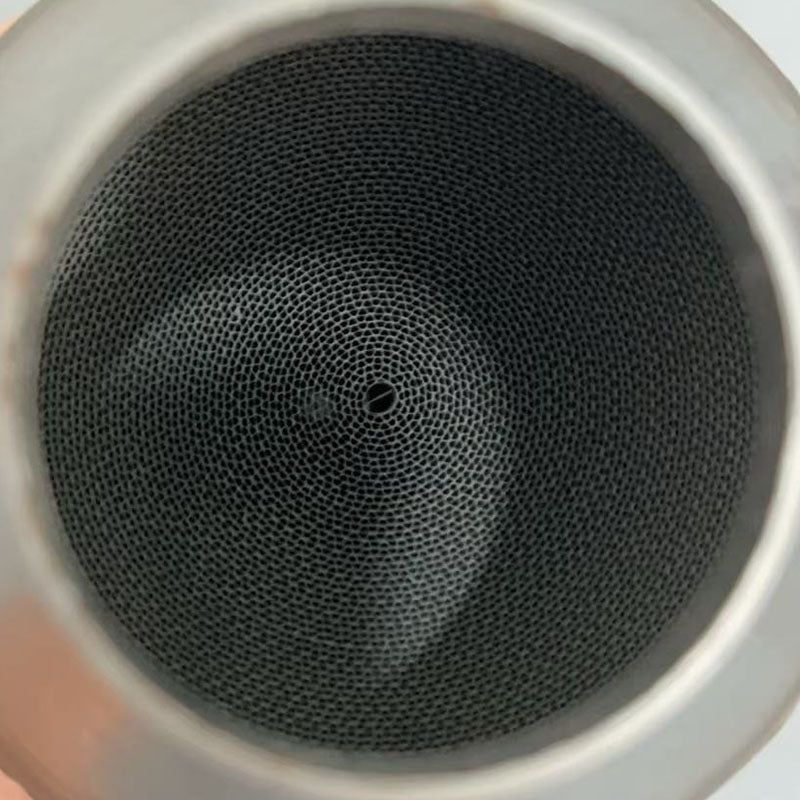
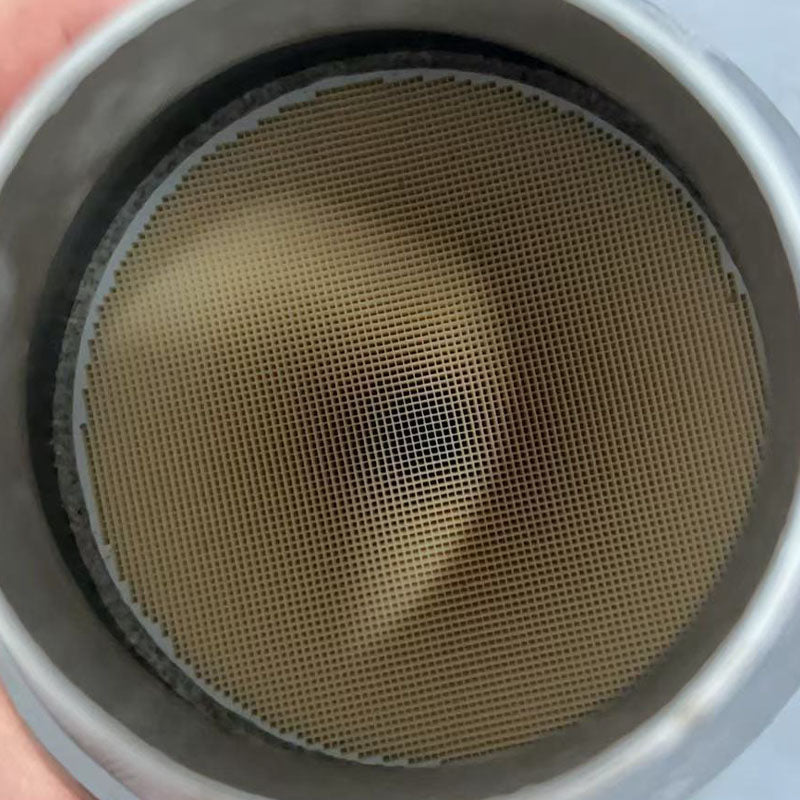
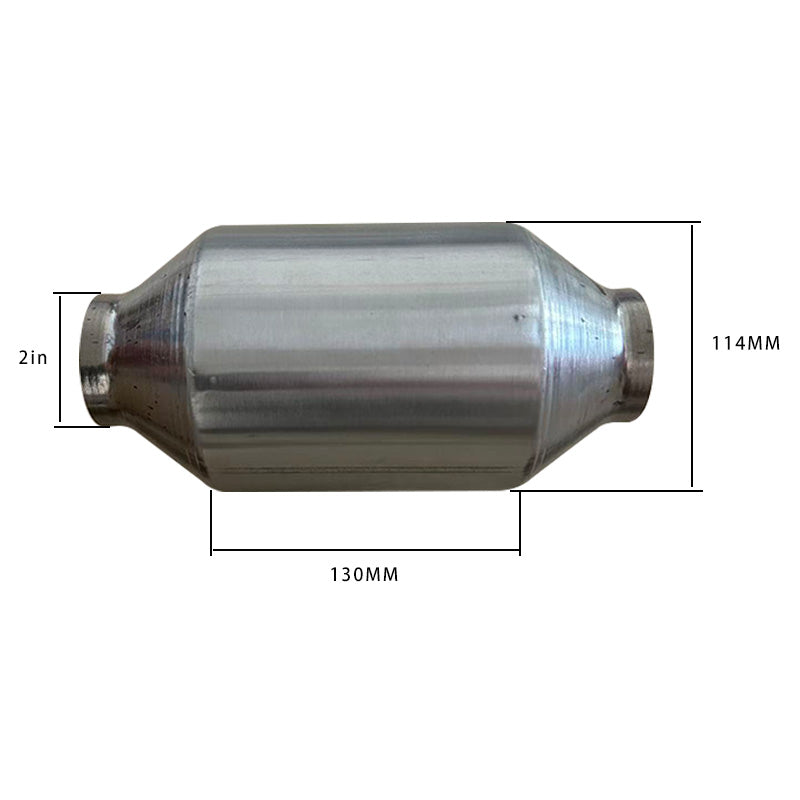
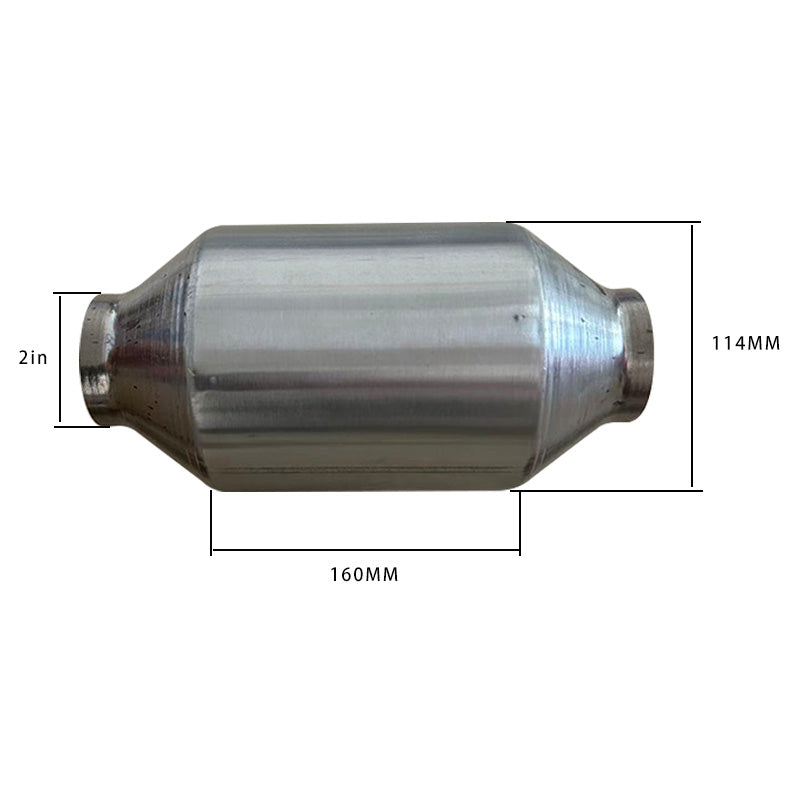
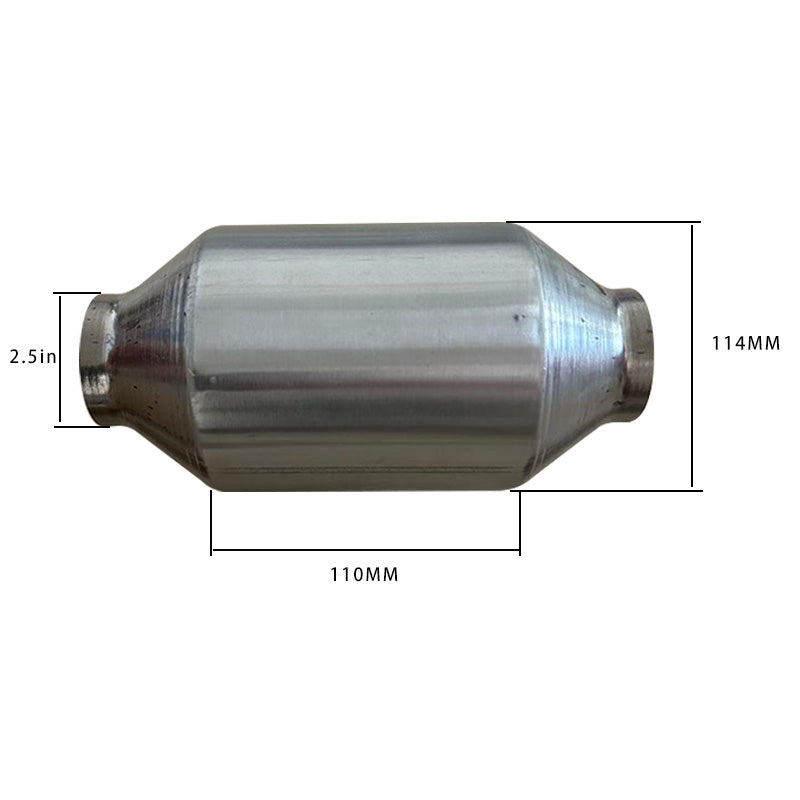
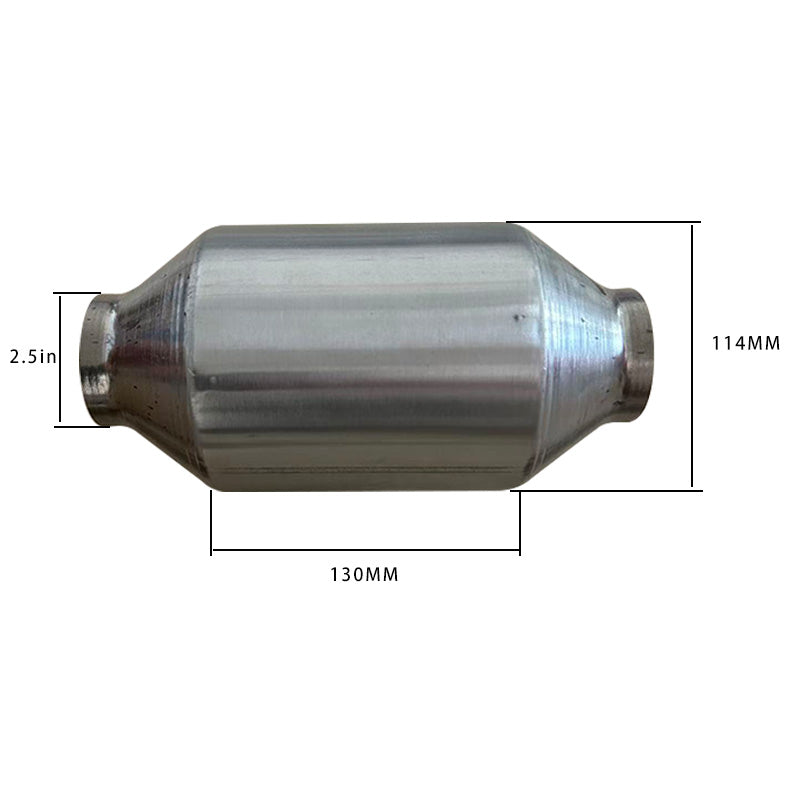
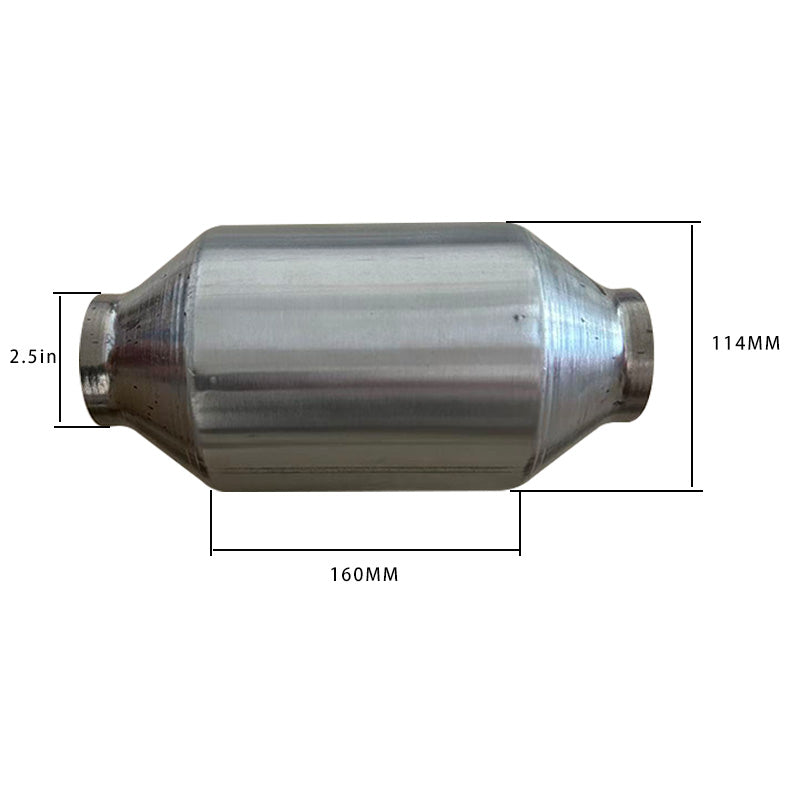
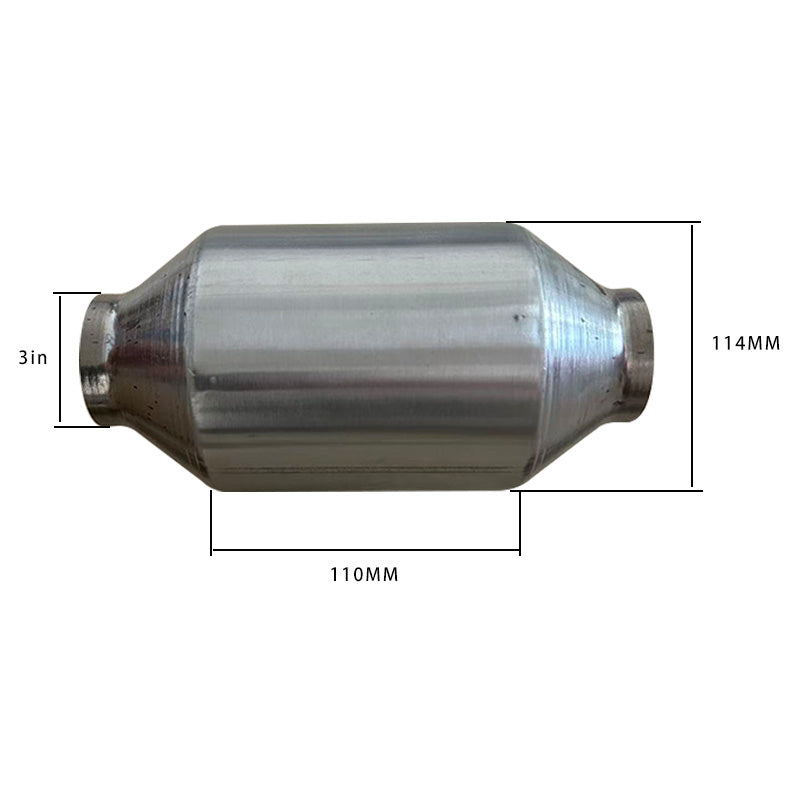
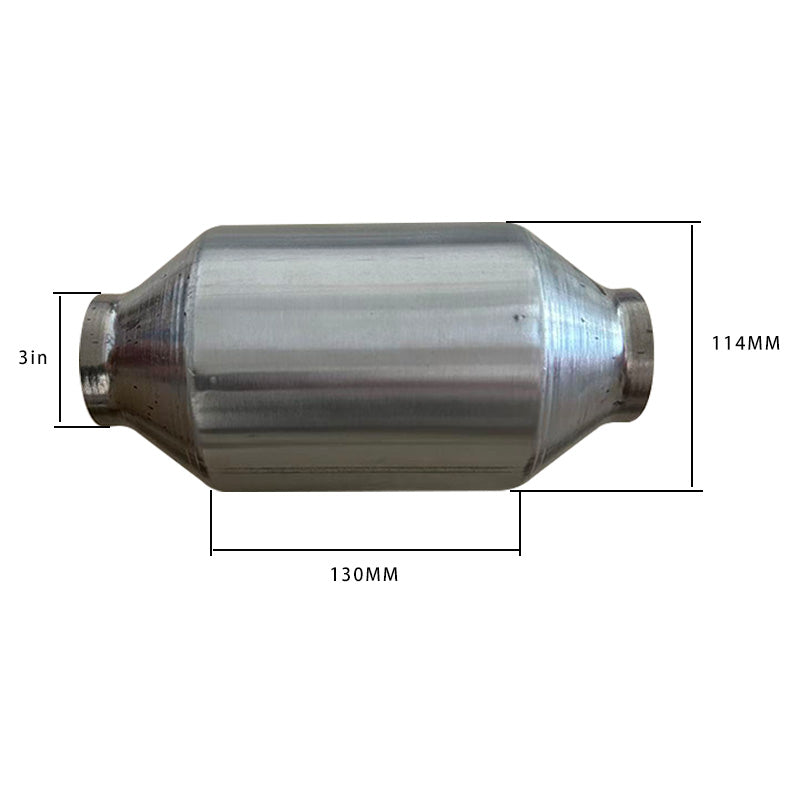
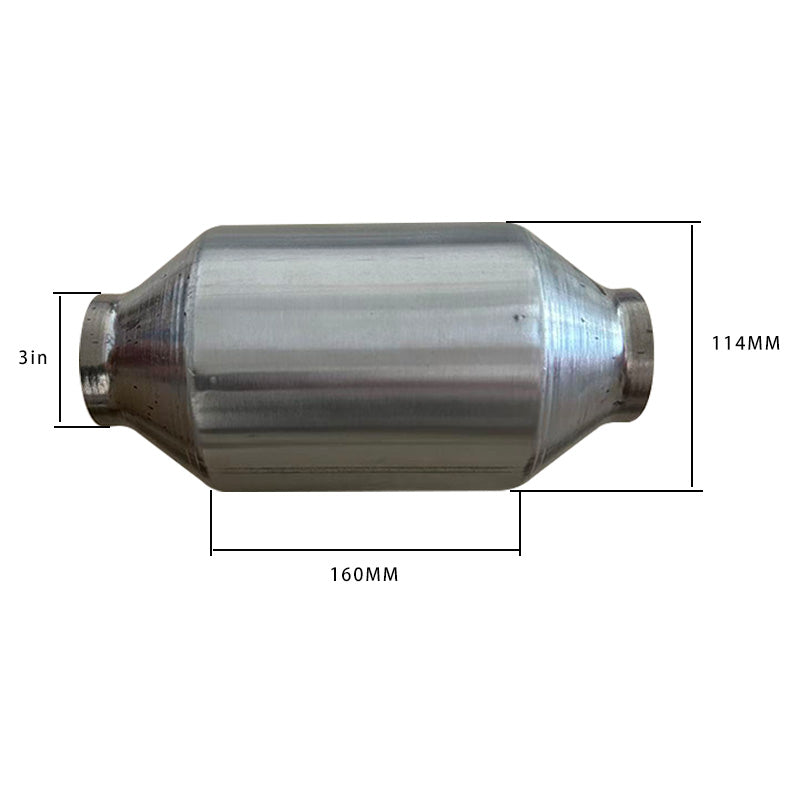
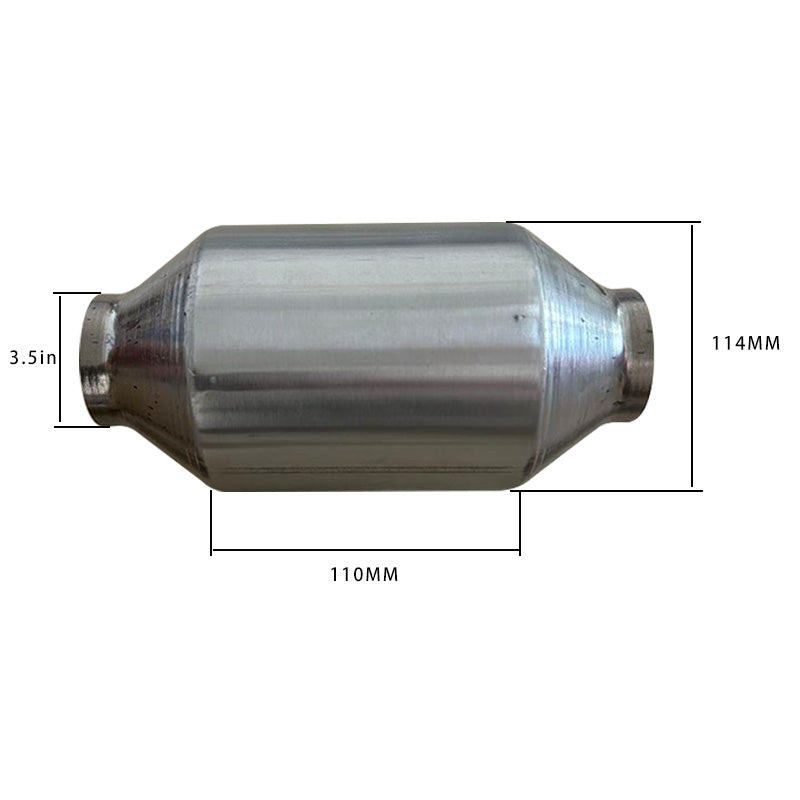
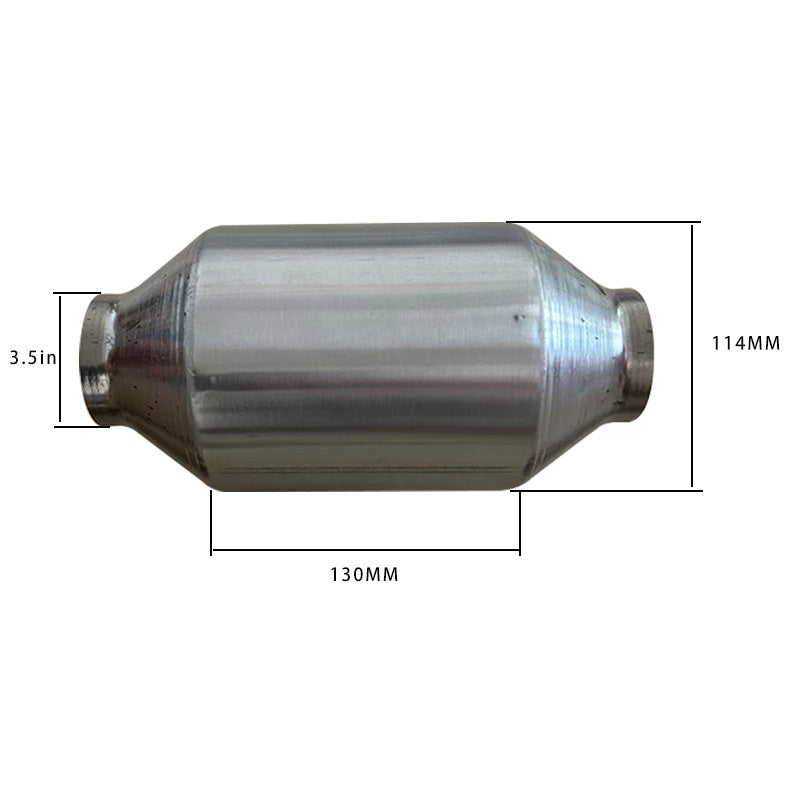


Direct-fit OEM replacement
bolt-on installation with no welding or cutting, saving time and shop costs.
Advanced catalysis
efficiently reduces CO, HC, and NOx to meet Euro 5/6 emission limits with ease.
Premium core + coating
delivers stable high‑temperature activity and extended service life.
Efficient response
18-24 hours online, 100% response rate from human customer service within 6-8 hours.
SVIPCAT
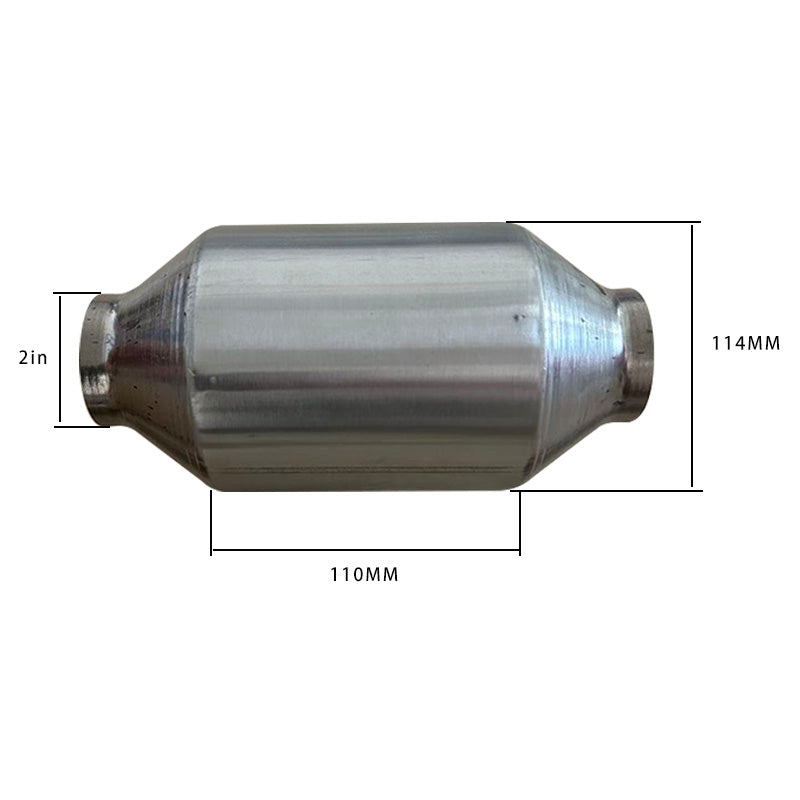
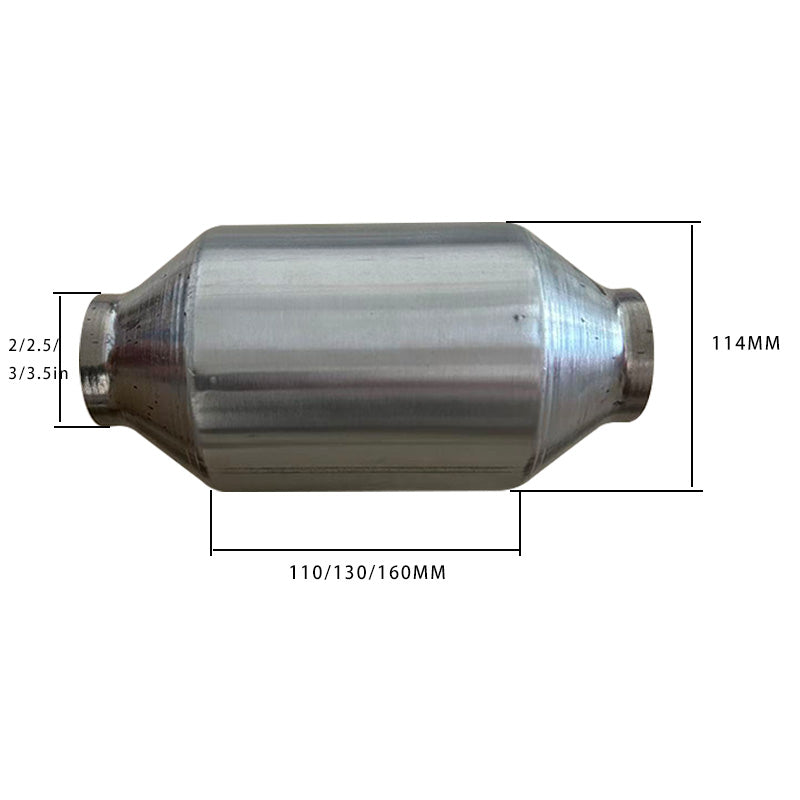
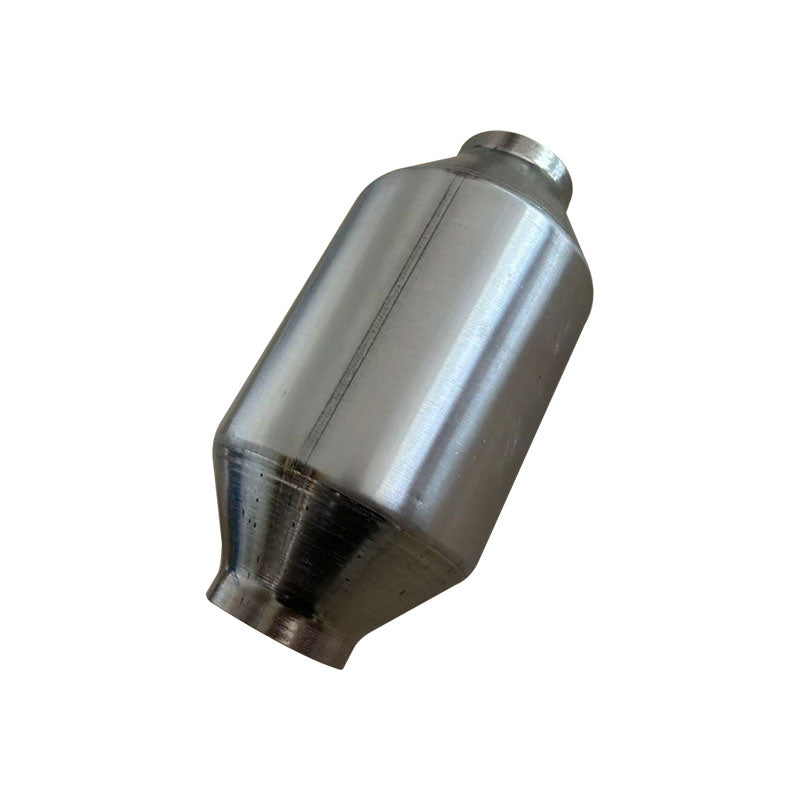
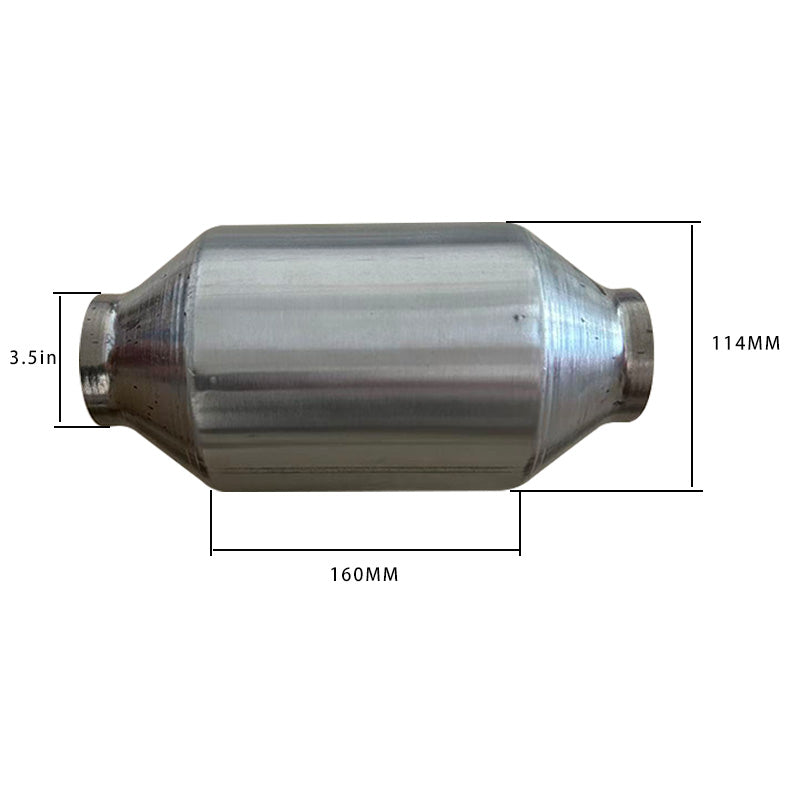
Metal Catalyst 400 Cpsi Durability with Precious MetalCoating Total Length 114 mm with Metal Housing
Product Description
Click to expandQ1 What is the difference between ceramic and metal substrates?
Ceramic and metal substrates are the two primary carrier materials used in catalytic converters. Here is a detailed comparison:
| Property | Ceramic Substrate | Metal Substrate |
|---|---|---|
| Material Composition | Cordierite (2MgO·2Al₂O₃·5SiO₂) or Silicon Carbide (SiC)[reference:0] | Fe-Cr-Al alloy (ferritic stainless steel, e.g. FeCr21Al6)[reference:1] |
| Wall Thickness | > 0.10 mm[reference:2] | ~ 0.03 mm (much thinner)[reference:3] |
| Cell Density (CPSI) | Typically ~400 CPSI[reference:4] | 25 – 1200 CPSI (wider range)[reference:5] |
| Geometric Surface Area | Lower[reference:6] | Higher[reference:7] |
| Mechanical Strength | Lower (brittle, prone to cracking)[reference:8] | High (resistant to vibration and impact)[reference:9] |
| Thermal Shock Resistance | Good[reference:10] | High[reference:11] |
| Weight | Heavier (1,500-2,000g)[reference:12] | Lighter (800-1,200g, 40-50% less)[reference:13] |
| Thermal Conductivity | Low (1-3 W/mK)[reference:14] | High (100-200× faster than ceramic)[reference:15] |
| Light-off Time (warm-up) | Slower (2-3 minutes)[reference:16] | Faster (30-45 seconds)[reference:17] |
| Back Pressure | Higher[reference:18] | Lower[reference:19] |
| Heat Capacity | High[reference:20] | Low[reference:21] |
| Temperature Tolerance | Up to ~1,000-1,200°C[reference:22] | Up to 1,300-1,400°C[reference:23] |
| Cell Shape | Square cells[reference:24] | Sinusoidal channels[reference:25] |
| Cost | Lower (cost-effective at volume)[reference:26] | Higher[reference:27] |
| Shape Flexibility | Limited (fixed tooling required) | Highly flexible (easy customization)[reference:28] |
Summary: Ceramic substrates are cost-effective and perform well at low space velocities[reference:29], but are brittle and heavier. Metal substrates offer superior durability, faster warm-up, lower back pressure, and greater design flexibility[reference:30], though at a higher cost[reference:31]. The choice depends on your specific application requirements.
Q2 What is the difference between ceramic and metal catalysts?
Both ceramic and metal catalysts serve the same fundamental purpose — converting harmful exhaust gases (CO, HC, NOx) into harmless substances through catalytic reactions. However, they differ significantly in performance characteristics:
| Performance Metric | Ceramic Catalyst | Metal Catalyst |
|---|---|---|
| Low Space Velocity Performance | Better conversions (especially for HC and CO)[reference:32] | Lower conversions at low space velocities[reference:33] |
| High Space Velocity Performance | Lower conversions[reference:34] | Better conversions (larger surface area)[reference:35] |
| CO Conversion Efficiency | Generally high, can be lower at high space velocities[reference:36] | Up to 98.6% at high temperatures[reference:37] |
| HC Conversion Efficiency | Up to 98.6%[reference:38] | ~61.3%[reference:39] |
| NOx Reduction Efficiency | Up to 87.2%[reference:40] | ~81.1%[reference:41] |
| Cold-Start Performance | Slower to reach operating temperature[reference:42] | Faster warm-up (30-45 seconds)[reference:43] |
| Durability | Good, but brittle — prone to cracking from impact[reference:44] | Excellent — highly resistant to vibration and thermal shock[reference:45] |
| Thermal Shock Vulnerability | Higher tendency towards thermal shock[reference:46] | Lower tendency — more tolerant of temperature extremes[reference:47] |
| Substrate Length (for same performance) | Double the length of metal substrate[reference:48] | Half the length of ceramic substrate[reference:49] |
| Typical Application | OBDII vehicles, standard passenger cars[reference:50] | OBDI applications, performance vehicles, diesel[reference:51] |
Key Takeaways:
- Ceramic catalysts excel at low space velocities (e.g., idle/low-load conditions) and offer excellent HC conversion[reference:52]. They are more cost-effective for high-volume production[reference:53].
- Metal catalysts outperform at high space velocities (e.g., high-speed driving) due to larger surface area and better mass transfer characteristics[reference:54][reference:55]. They warm up faster, resist thermal shock better, and offer greater durability[reference:56], but come at a higher cost[reference:57].
Q3 How does a catalytic converter work?
A three-way catalytic converter (TWC) simultaneously converts three primary harmful exhaust pollutants into less harmful substances through oxidation and reduction reactions:
- Carbon Monoxide (CO) → oxidized into Carbon Dioxide (CO₂)
- Unburned Hydrocarbons (HC) → oxidized into Carbon Dioxide (CO₂) and Water (H₂O)
- Nitrogen Oxides (NOx) → reduced into Nitrogen (N₂) and Oxygen (O₂)
The substrate (ceramic or metal) is coated with a "washcoat" containing precious metal catalysts (platinum, palladium, rhodium). As exhaust gases pass through the honeycomb channels at high temperature (around 300°C), these metals catalyze the chemical reactions that convert approximately 98% of harmful emissions into harmless gases[reference:58]. This process is essential for meeting global emissions standards and protecting air quality.
Q4 Does this meet Euro 3-6 emissions standards?
Yes. Our metal and ceramic catalytic converter substrates are designed to comply with Euro 3, Euro 4, Euro 5, and Euro 6 emissions standards. When properly installed on a vehicle that is otherwise in good mechanical condition, our substrates support the vehicle's ability to meet the emissions limits for which it was originally certified. Euro 3 was introduced in 2000, with each subsequent standard imposing stricter limits — our substrates are engineered to meet the requirements across this range.
Note: Emissions compliance depends on the complete vehicle system, not just the catalytic converter. Proper engine tuning, oxygen sensor function, and overall engine health are also critical factors.
Q5 What is your warranty policy?
Our warranty policy differs by product type:
- Ceramic Muffler Cores — No warranty provided. These are mechanical components subject to wear and external factors.
- Catalytic Converter Substrates (Ceramic or Metal) — Covered by a 2‑year / 50,000 km (approximately 31,000 miles) warranty against manufacturing defects. This warranty covers the substrate structure and catalytic coating integrity under normal use conditions.
The warranty does not cover damage caused by improper installation, engine misfire, use of leaded fuel, physical impact damage, or contamination from oil/coolant. Please retain your purchase receipt and installation records for warranty claims.
Q6 Universal metal catalytic converter installation guide
Product: Universal Metal Catalytic Converter – 400 CPSI, Total Length 250mm
This universal metal catalytic converter is designed for weld‑on installation[reference:59]. Professional installation by a qualified exhaust technician is strongly recommended. Follow these step‑by‑step guidelines:
⚠️ Before You Begin:
- Ensure the vehicle is parked on a level surface and securely supported[reference:60].
- Allow the exhaust system to cool completely before starting work[reference:61].
- Disconnect the negative battery terminal to prevent electrical shorts[reference:62].
- Spray mounting bolts with penetrating oil a few hours ahead to ease removal[reference:63].
- Refer to your vehicle's official service manual for detailed, model‑specific procedures[reference:64].
Step 1: Remove the Old Catalytic Converter
- Locate the existing catalytic converter in the exhaust system.
- Remove any heat shields or brackets that may be in the way.
- Disconnect the oxygen sensors (O₂ sensors) from the old converter. Take care not to damage the sensor wiring.
- Unbolt the flanged connections at both ends of the converter. If the bolts are seized, apply additional penetrating oil and allow it to soak.
- Carefully remove the old catalytic converter assembly from the vehicle[reference:65].
Step 2: Prepare the Exhaust Pipes
- Use a wire brush or sandpaper to thoroughly clean any rust, carbon deposits, or old gasket material from the exposed exhaust pipe ends and flanges[reference:66].
- Measure and mark the cutting points on the exhaust pipes to match the new converter's dimensions.
- Cut the pipes as needed using an appropriate cutting tool (e.g., reciprocating saw or exhaust pipe cutter).
- Deburr the cut edges to ensure a clean, smooth surface for welding.
Step 3: Position the New Converter
- Position the new universal metal catalytic converter in place[reference:67].
- Ensure the converter is oriented correctly — check for any flow direction arrows marked on the unit.
- Confirm that the converter is properly aligned with the exhaust system and that all hanger brackets align with the vehicle's mounting points[reference:68].
- Use jack stands to support the converter at the correct height during fitting[reference:69].
Step 4: Weld the Converter in Place
- Tack weld the converter at multiple points to secure its position before final welding.
- Perform full welds around the entire circumference of both the inlet and outlet connections[reference:70].
- Use appropriate welding techniques and filler material (stainless steel wire) to prevent corrosion[reference:71].
- Allow the welds to cool slowly to prevent warping or stress fractures.
- If using clamps instead of welding, ensure all clamps are tightened to the manufacturer's torque specifications.
Step 5: Reinstall Components and Test
- Reinstall any heat shields or brackets that were removed.
- Reconnect the oxygen sensors to the new converter[reference:72]. Ensure the sensors are properly seated and the wiring is secure.
- Check that all hanger rods are centered in the isolators[reference:73].
- Reconnect the negative battery terminal.
- Start the engine and check for exhaust leaks around all welded and bolted connections.
- Allow the engine to reach normal operating temperature and verify that the check engine light remains off.
- Take a short test drive to confirm proper function and listen for any unusual noises.
⚠️ Important Safety & Compliance Notes:
• All welding must be performed by a qualified technician to maintain the integrity of the exhaust system[reference:74].
• Improper installation may damage the substrate, reduce performance, void the warranty, and create safety hazards.
• Ensure the replacement converter is the correct type for your vehicle to avoid adverse effects on performance or emission control[reference:75].
• For vehicles registered in California or other CARB-restricted states, verify that the converter meets applicable CARB compliance requirements[reference:76].
• Always follow your vehicle manufacturer's service procedures. This guide provides general instructions only[reference:77].
• All welding must be performed by a qualified technician to maintain the integrity of the exhaust system[reference:74].
• Improper installation may damage the substrate, reduce performance, void the warranty, and create safety hazards.
• Ensure the replacement converter is the correct type for your vehicle to avoid adverse effects on performance or emission control[reference:75].
• For vehicles registered in California or other CARB-restricted states, verify that the converter meets applicable CARB compliance requirements[reference:76].
• Always follow your vehicle manufacturer's service procedures. This guide provides general instructions only[reference:77].
Q7 What are your shipping & delivery times?
Our shipping and delivery times depend on stock availability:
- If we have stock: We ship within 1–3 business days. Delivery typically takes 12–15 days (including customs clearance and duties).
- If we are out of stock: Production and handling take 15–20 business days, then delivery takes approximately 12–15 days (including customs clearance and duties).
All shipments are sent DDP (Delivered Duty Paid) – this means that all customs clearance fees, import duties, and taxes are already included in the total price you pay. You will not be charged any extra fees upon delivery.
If you need faster delivery, please contact us to arrange expedited shipping via DHL, UPS, or FEDEX (additional charges apply).
We will provide you with a tracking number as soon as your order is dispatched.
Q8 How can I contact you?
You can reach our team directly via WhatsApp or email. We are happy to assist with any questions about products, sizing, orders, or technical support.
We typically respond within 24 hours (Monday–Saturday). Please include your order number or vehicle details for faster assistance.
Q9 Where is your headquarters located?
Our company headquarters is located at:
Building C, Zhongguan Innovation Center, Dongcheng 2nd Road, Pujiang Town, Minhang District, Shanghai, China
We welcome business visits by appointment. Please contact us in advance to arrange a suitable time.
Regular price
£122.89 GBP
Taxes included.
Shipping calculated at checkout.
34 in stock
Material :
Ceramic
Caliber ( inlet x outlet) mm :
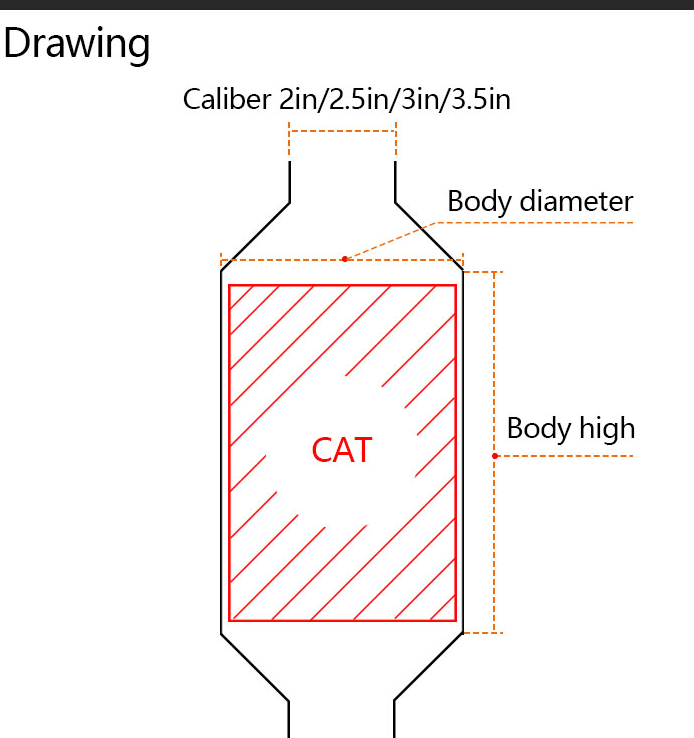
50.8 x 50.8 mm / (2.0 x 2.0 in)
(body diameter x body high) mm :
114 x 110 mm
Quantity :
Whatsapp
E-mail
- Davin : KSRCAT@proton.me
- Alison:Ksrcatalytic@gmail.com
- Mia : Kesairay@proton.me
Metal Catalyst 400 Cpsi Durability with Precious MetalCoating Total Length 114 mm with Metal Housing
Regular price
£122.89 GBP

