
- Davin : +86 133 3569 6939
- Alison : +86 150 8247 5717
- Mia : +86 136 8171 1685
Skip to product information


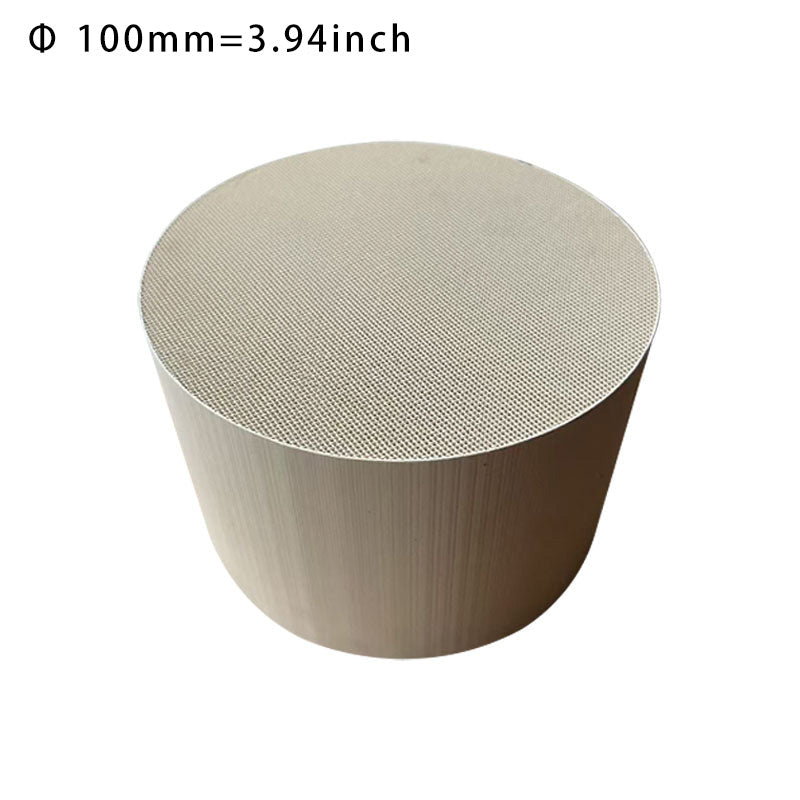
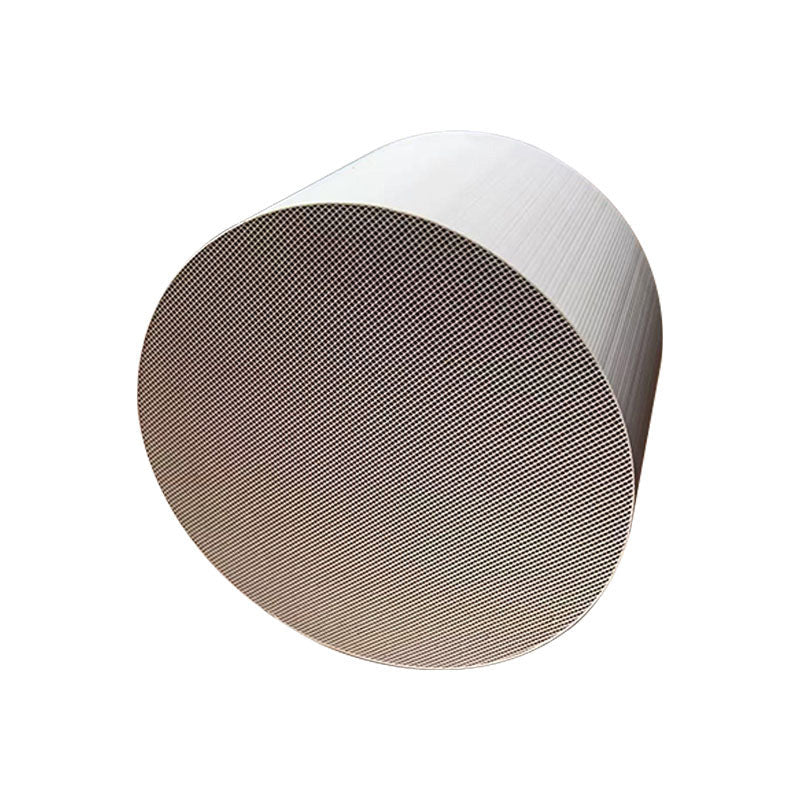


Direct-fit OEM replacement
bolt-on installation with no welding or cutting, saving time and shop costs.
Advanced catalysis
efficiently reduces CO, HC, and NOx to meet Euro 5/6 emission limits with ease.
Premium core + coating
delivers stable high‑temperature activity and extended service life.
Efficient response
18-24 hours online, 100% response rate from human customer service within 6-8 hours.
SVIPCAT Store
Ceramic DOC 100mm
Product Description
Click to expandQ1 What is a diesel DOC catalyst?
A DOC (Diesel Oxidation Catalyst) is an exhaust after‑treatment device used in diesel vehicles to oxidize harmful gaseous pollutants. It is typically the first catalyst in the diesel exhaust system, positioned close to the turbocharger outlet.
Core Function:
- Converts Carbon Monoxide (CO) into Carbon Dioxide (CO₂) through oxidation.
- Converts Unburned Hydrocarbons (HC) into CO₂ and Water (H₂O).
- Oxidizes a portion of NO (nitric oxide) to NO₂, which is essential for the passive regeneration of the downstream DPF (Diesel Particulate Filter).
- Reduces the characteristic diesel exhaust smell (aldehydes and PAHs).
Substrate Material: DOC can be manufactured using either cordierite ceramic or metal honeycomb substrates, depending on the application. Ceramic is more common for standard OEM applications due to its cost‑effectiveness, while metal is often used in high‑performance or compact designs.
DOC is a critical component for meeting Euro 4, Euro 5, and Euro 6 emission standards for diesel vehicles.
Q2 Working principle of diesel DOC
The DOC works on the principle of catalytic oxidation. The honeycomb substrate is coated with a "washcoat" containing precious metal catalysts — typically Platinum (Pt) and Palladium (Pd) — which promote chemical reactions without being consumed themselves.
Chemical Reactions:
- CO + ½ O₂ → CO₂ (Carbon Monoxide to Carbon Dioxide)
- HC + O₂ → CO₂ + H₂O (Hydrocarbons to CO₂ and Water)
- NO + ½ O₂ → NO₂ (Nitric Oxide to Nitrogen Dioxide)
Operating Conditions:
- The DOC becomes active (light‑off) at temperatures around 200–250°C.
- Optimal conversion efficiency (over 90% for CO and HC) is achieved at 300–450°C.
- Excessive heat above 650°C can cause thermal degradation of the catalyst coating.
Critical Role in the System:
- By converting NO to NO₂, the DOC provides the oxidant needed for passive DPF regeneration, which burns off trapped soot at lower temperatures (around 300–350°C).
- It also protects the downstream SCR (Selective Catalytic Reduction) catalyst from HC and CO poisoning.
Q3 Difference between DOC coatings?
The main difference in DOC coatings lies in the precious metal loading (expressed in grams per cubic foot — g/cft) and the Pt:Pd ratio. Higher loadings and specific ratios are required to meet stricter emission standards.
| Standard | Precious Metal Loading | Pt:Pd Ratio |
|---|---|---|
| Euro 5 | 20 g/cft | 4:1 |
| Euro 6 | 40 g/cft | 4:1 |
Explanation:
- Euro 5 requires 20 g/cft (20 grams of precious metals per cubic foot of substrate volume) to achieve the required CO and HC conversion efficiency under the NEDC test cycle.
- Euro 6 requires a higher loading of 40 g/cft (40 grams per cubic foot) to meet the stricter real‑driving emission (RDE) requirements, ensuring the DOC remains effective over a wider range of operating conditions and throughout its lifetime.
- The 4:1 Pt:Pd ratio is a common formulation that balances cost (palladium is less expensive than platinum) while maintaining high oxidation activity and sulfur tolerance.
Higher loadings provide better durability, more consistent performance under variable temperatures, and longer service life — which is why Euro 6 demands twice the loading of Euro 5.
Q4 What DOC sizes can you produce?
We have the capability to produce DOC catalysts in a wide variety of sizes and shapes to suit different diesel engine applications — from passenger cars and light‑commercial vehicles to heavy‑duty trucks and off‑highway machinery.
Custom Manufacturing:
- We can manufacture DOC catalysts based on customer‑provided drawings. Whether you have a 2D CAD file or a 3D model, we can work with your specifications to create the exact product you need.
- We also accept physical samples for reverse‑engineering and dimension verification.
Design Considerations:
- The substrate cell density (CPSI) must be mutually agreed upon between the customer and our engineering team. This is because CPSI affects exhaust backpressure, filtration efficiency, and catalytic performance — it must be optimized for your specific engine parameters.
- We offer a wide range of options including different substrate materials (cordierite ceramic, silicon carbide, or metal), wall thicknesses, and precious metal loadings (3g/cft to 40g/cft and beyond).
Next Steps:
- Please contact our sales team with your technical requirements or send us your drawings for a quotation.
- We will provide you with a feasibility assessment, lead time, and pricing based on your specific needs.
We are committed to delivering high‑quality DOC solutions tailored to your application.
Q5 Which emission standards does this DOC meet?
Our ceramic DOC catalysts are designed to meet Euro IV, Euro V, and Euro VI emission standards. The specific emission standard a DOC can achieve depends on several factors:
- Precious metal loading – Euro V typically requires 20 g/cft, while Euro VI requires 40 g/cft.
- Substrate cell density (CPSI) – higher CPSI provides greater surface area for catalytic reaction, improving conversion efficiency.
- Coating formulation – the Pt:Pd ratio and washcoat composition are optimized for specific emission targets.
- Engine calibration – the DOC must be matched to the engine's operating parameters and exhaust temperature profile.
Typical Applications:
- Euro IV / V – passenger cars, light commercial vehicles, and trucks up to 3.5 tons.
- Euro VI – heavy‑duty trucks, buses, and off‑highway machinery requiring the strictest emission controls.
If you have a specific emission target or vehicle application, please contact us and we will recommend the most suitable DOC specification for your needs.
Q6 Warranty policy: 1 year
We offer a 1‑year warranty on our ceramic DOC products from the date of purchase.
What is covered:
- Manufacturing defects in the ceramic substrate, such as cracks, broken walls, or structural failures that occur under normal use.
- Coating integrity for coated DOC (flaking or detachment of the washcoat).
What is NOT covered:
- Damage caused by improper installation (e.g., over‑torquing, incorrect orientation, or physical impact).
- Engine‑related issues (misfires, excessive oil consumption, or incorrect air‑fuel mixture) that lead to overheating or clogging.
- Fuel contamination (high‑sulfur fuel, biodiesel impurities, or additives that poison the catalyst).
- Thermal degradation due to sustained exhaust temperatures above 650°C.
- Normal wear and tear or soot loading beyond the filter's capacity.
Claim procedure: To make a warranty claim, please contact our support team with your order number, installation records, and clear photos of the defect. We will review each case individually.
We recommend professional installation and regular maintenance to ensure the DOC operates within its design parameters.
Q7 Installation guide for ceramic DOC (diesel vehicles)
Installing a ceramic DOC requires careful attention to its physical and operational requirements. The following principles should be followed for a successful installation:
Mounting Position:
- The DOC must be installed as close as possible to the engine (typically immediately after the turbocharger) to ensure the catalyst reaches its light‑off temperature (200–250°C) quickly.
- It should be positioned before the DPF and before the SCR (if equipped) in the exhaust system.
- Ensure the flow direction arrow points toward the rear of the vehicle.
Mechanical Support & Housing:
- Ceramic substrates are brittle — they must be securely mounted using appropriate metal cans, mounting mats, and brackets to absorb vibration and thermal expansion.
- The housing must be designed to allow the substrate to expand freely without constraint.
- Use high‑temperature gaskets and sealing materials to prevent exhaust gas bypass.
Exhaust Pipe Preparation:
- Before installation, thoroughly clean the exhaust pipe ends to remove rust, carbon, and debris.
- If welding is required, use stainless steel filler material (for stainless exhausts) to prevent corrosion.
- Fit new gaskets on all flanged connections — never reuse old gaskets.
Sensor Connections:
- If the DOC has integrated temperature sensors or NOx sensors, ensure they are correctly connected to the ECU.
- Check that all sensor wiring is routed away from hot exhaust components and moving parts.
Post‑Installation Testing:
- Start the engine and check for exhaust leaks around all connections.
- Allow the engine to reach operating temperature and monitor the DOC's performance via diagnostic tools (exhaust gas temperature, backpressure, and NOx/CO readings).
- Perform a test drive under various load conditions to confirm the catalyst reaches light‑off temperature and operates correctly.
⚠️ Important Notes:
• Ceramic DOC substrates are fragile — handle with extreme care. Dropping or knocking the unit can cause invisible cracks that will lead to performance failure.
• DO NOT use leaded fuel or high‑sulfur diesel (> 500 ppm), as these will permanently poison the catalyst.
• Ensure the engine is in good mechanical condition (no misfires, no excessive oil consumption) before installing a new DOC.
• If the vehicle has a DPF, ensure the DOC is correctly positioned upstream to allow proper passive regeneration.
• We strongly recommend professional installation by a certified diesel exhaust technician.
• Ceramic DOC substrates are fragile — handle with extreme care. Dropping or knocking the unit can cause invisible cracks that will lead to performance failure.
• DO NOT use leaded fuel or high‑sulfur diesel (> 500 ppm), as these will permanently poison the catalyst.
• Ensure the engine is in good mechanical condition (no misfires, no excessive oil consumption) before installing a new DOC.
• If the vehicle has a DPF, ensure the DOC is correctly positioned upstream to allow proper passive regeneration.
• We strongly recommend professional installation by a certified diesel exhaust technician.
Q8 What are your shipping & delivery times?
Our shipping and delivery times depend on stock availability:
- If we have stock: We ship within 1–3 business days. Delivery typically takes 12–15 days (including customs clearance and duties).
- If we are out of stock: Production and handling take 15–20 business days, then delivery takes approximately 12–15 days (including customs clearance and duties).
All shipments are sent DDP (Delivered Duty Paid) – this means that all customs clearance fees, import duties, and taxes are already included in the total price you pay. You will not be charged any extra fees upon delivery.
If you need faster delivery, please contact us to arrange expedited shipping via DHL, UPS, or FEDEX (additional charges apply).
We will provide you with a tracking number as soon as your order is dispatched.
Q9 How can I contact you?
You can reach our team directly via WhatsApp or email. We are happy to assist with any questions about products, sizing, orders, or technical support.
We typically respond within 24 hours (Monday–Saturday). Please include your order number or vehicle details for faster assistance.
Q10 Where is your headquarters located?
Our company headquarters is located at:
Building C, Zhongguan Innovation Center, Dongcheng 2nd Road, Pujiang Town, Minhang District, Shanghai, China
We welcome business visits by appointment. Please contact us in advance to arrange a suitable time.
Regular price
£56.62 GBP
Taxes included.
Shipping calculated at checkout.
33 in stock
Size(diameter x height) :
100*100mm
Standard :
20g/cft
Material :
Ceramic
Quantity :
Whatsapp
E-mail
- Davin : KSRCAT@proton.me
- Alison:Ksrcatalytic@gmail.com
- Mia : Kesairay@proton.me
Ceramic DOC 100mm
Regular price
£56.62 GBP

