
- Davin : +86 133 3569 6939
- Alison : +86 150 8247 5717
- Mia : +86 136 8171 1685
Skip to product information




Direct-fit OEM replacement
bolt-on installation with no welding or cutting, saving time and shop costs.
Advanced catalysis
efficiently reduces CO, HC, and NOx to meet Euro 5/6 emission limits with ease.
Premium core + coating
delivers stable high‑temperature activity and extended service life.
Efficient response
18-24 hours online, 100% response rate from human customer service within 6-8 hours.
SVIPCAT
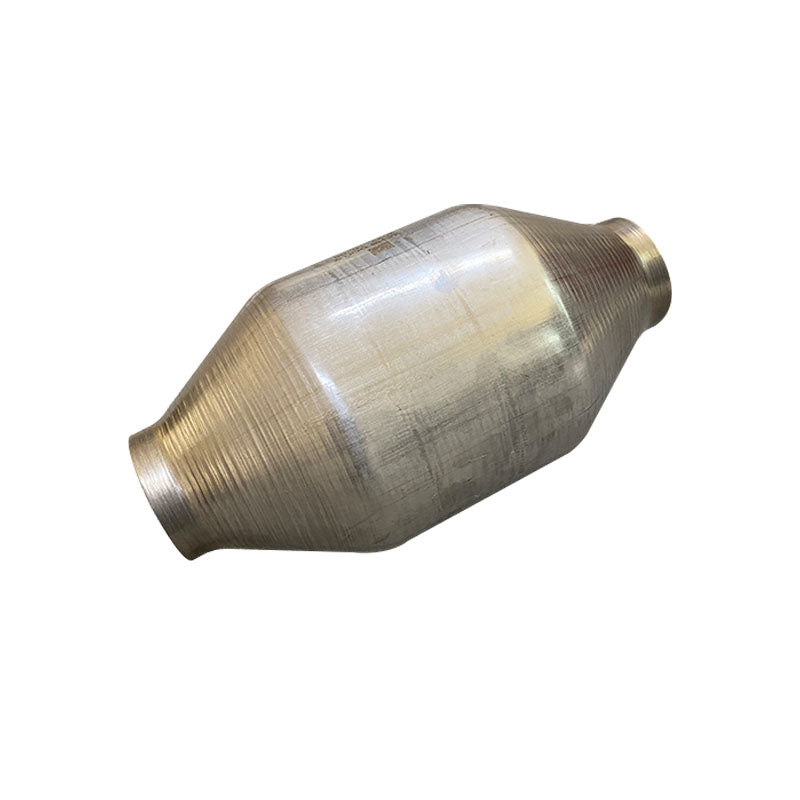
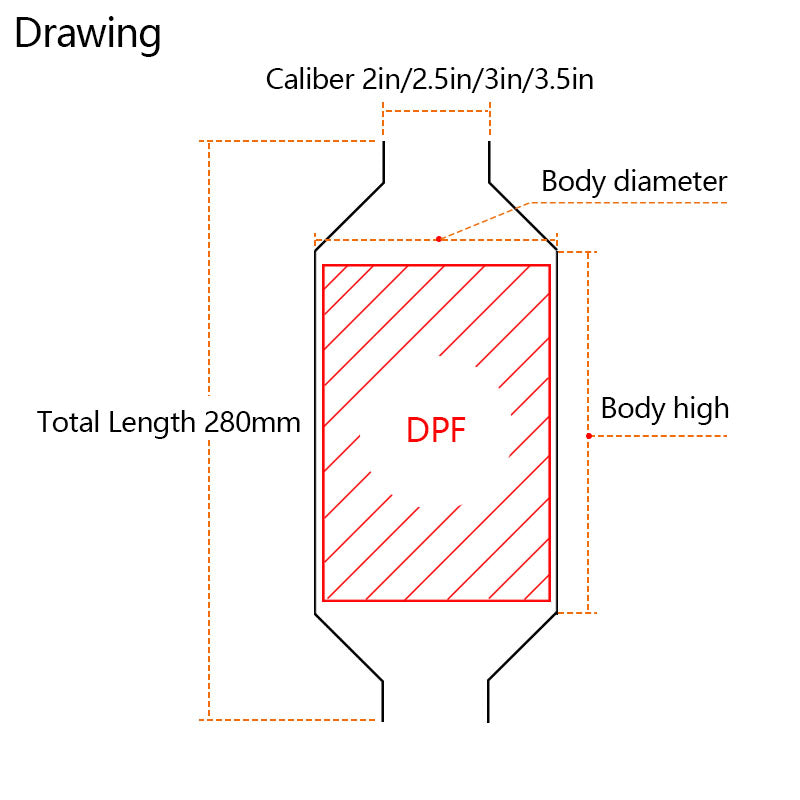
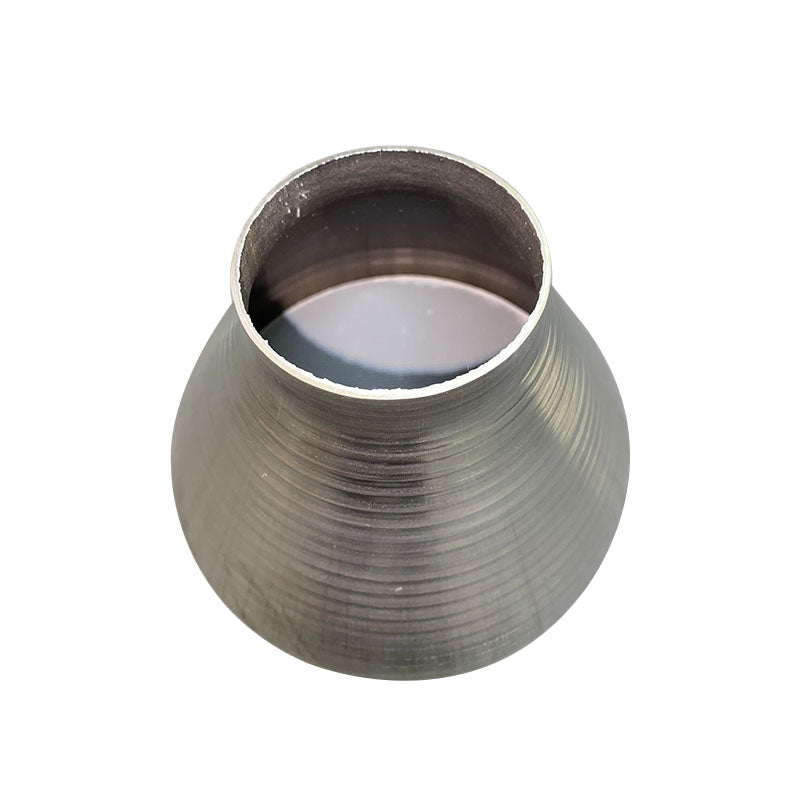
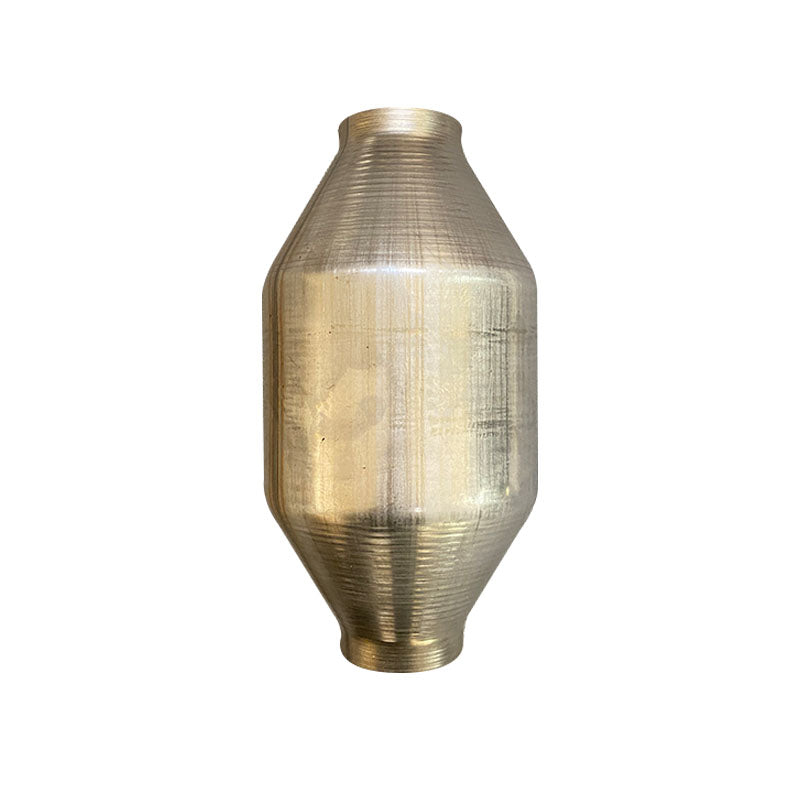
Universal DOC Ceramic Honeycomb Catalyst Diesel Vehicle Catalytic Converter Total Length 280mm
Name analysis
Ceramic DOC: refers to a diesel oxidation catalyst (DOC) that uses cordierite (2MgO·2Al₂O₃·5SiO₂) as a carrier material.
Cordierite: A ceramic material with a low expansion coefficient, it has excellent thermal stability and low cost characteristics and is currently the most commonly used carrier material for diesel vehicle DOC.
Characteristics
(1) Material characteristics
High temperature resistance: It can withstand continuous high temperatures of 800~1000°C and withstand 1200°C for a short time (but long-term high temperatures may cause sintering failure).
Low thermal expansion coefficient: The thermal expansion coefficient is low (~1×10⁻⁶/°C), and the thermal shock resistance is good, avoiding cracking due to sudden temperature changes.
Porous structure: The surface is coated with γ-alumina (γ-Al₂O₃) to increase the specific surface area and load precious metal catalysts such as platinum (Pt) and palladium (Pd).
(2) Structural characteristics
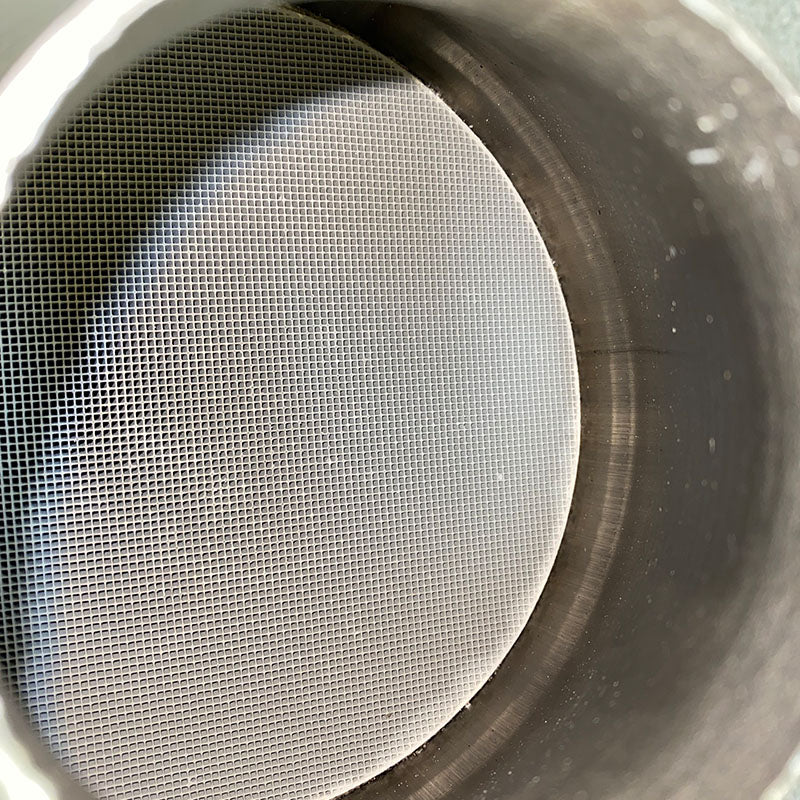
Honeycomb carrier: usually adopts a honeycomb structure of 400-600 CPSI (pores per square inch) to balance airflow distribution and back pressure
Lightweight: low density (about 2.0 g/cm³), lighter than metal DOC.
(3) Environmental adaptability
Chemical corrosion resistance: good tolerance to diesel sulfur content (under low sulfur fuel conditions), but long-term exposure to high sulfur environment may cause poisoning.
Moderate mechanical strength: more brittle than metal DOC, need to avoid severe vibration or impact.
Function
(1) Core function (oxidation reaction)
CO oxidation: carbon monoxide (CO) → carbon dioxide (CO₂).
HC oxidation: unburned hydrocarbons (HC) → water (H₂O) + CO₂.
SOF conversion: soluble organic matter (SOF, part of particulate matter PM) → reduction of PM emissions.
NO oxidation: partial nitrogen monoxide (NO) → nitrogen dioxide (NO₂), assisting DPF passive regeneration (NO₂ + soot → CO₂ + N₂).
(2) Auxiliary functions
Reducing exhaust odor: oxidizing sulfur and nitrogen compounds to reduce the pungent odor unique to diesel vehicles.
Protecting downstream systems: reducing the impact of unburned HC on the SCR catalyst.
| Advantage | Description |
|---|---|
| Low cost | Cordierite material and manufacturing process are mature, with prices significantly lower than metal DOC and silicon carbide DOC. |
| Lightweight | Lighter than metal DOC, suitable for passenger cars and light commercial vehicles. |
| Low backpressure | Honeycomb structure optimizes airflow, reducing engine power loss. |
| Fast light-off | Catalyst coating can reach operating temperature quickly during cold start (though not as fast as metal DOC). |
| Wide applicability | Complies with mainstream emission standards like Euro 5/6 , suitable for most diesel vehicles. |
Regular price
£24.45 GBP
Taxes included.
Shipping calculated at checkout.
29 in stock
Caliber ( inlet x outlet) mm :
50.8 x 50.8 mm / (2.0 x 2.0 in)
(body diameter x body high) mm :
101 x 110mm
Standard :
10g/cft.Pt
Quantity :
Whatsapp
E-mail
- Davin : KSRCAT@proton.me
- Alison:Ksrcatalytic@gmail.com
- Mia : Kesairay@proton.me
Universal DOC Ceramic Honeycomb Catalyst Diesel Vehicle Catalytic Converter Total Length 280mm
Regular price
£24.45 GBP

